
ABM for AI vendors: how to reach named UK accounts
Account-based marketing (ABM) for an AI vendor means choosing a short list of UK organisations that fit. You then...
Read more
When Somerset Bridge Group first looked at AI, the conversations were about buying hardware, tools, and licences.
Then the motor insurer surveyed more than 220 colleagues to establish a baseline, which showed very different starting points across the business. Chief People Officer Katherine Hawkins-Jones and Learning and Development Manager Ceri Sharples, speaking at aiblLIVE London, identified five barriers to adoption: confidence, capability, time, leadership, and governance.
Time was the biggest. Business as usual got in the way of experimenting, and learning competed with everyday delivery.
That changed the diagnosis. “It was clear that we didn’t have a software tool or development problem, we had an adoption problem,” Katherine said. It became an organisational change challenge.
It also meant confronting how the company usually worked. Katherine said that too much top-down control can suppress ideas and slow time to market. That was typically how Somerset Bridge operated. So it chose to work from the top down and the bottom up at the same time.
At the top, 16 executives went through an AI for Leaders programme so they could be seen learning, experimenting, and failing. The need was clear when one executive kept asking who this new employee, Claude, was, and why everybody was talking about him.
Leaders were there to set the rules and, above all, to give people permission to step away from the day-to-day and experiment. An AI steering group sets strategic direction and helps decide which opportunities to pursue.
Across the business, the AI Academy gives people protected time to experiment during the working week, mainly with Copilot, rather than as an add-on to their day job. Somerset Bridge also runs fortnightly learning sessions and sets aside quarterly experimentation time. Ambassadors and communities surface practical needs and credible use cases.
An AI forum connects the two sides of the business. The promptathons, held in Bristol and Newcastle, tied the learning to real work. Earlier learning activities hadn’t been linked to the problems people faced. At the promptathons, cross-functional teams were asked what drove them mad, then worked on genuine business problems live with support from AI champions. That surfaced problems the company would never have thought to address through a change programme. The two events produced 20 ideas.
At the Bristol event, participants estimated that nine ideas could save around 5,000 hours. These were self-assessed estimates made on the day, with the actual benefits still to be established.
The two directions meet when the business decides which ideas to pursue. Somerset Bridge has recently introduced a “kill or keep it” approach, looking at ideas from a commercial perspective, not just an emotional one.
“It’s really hard to convince people to kill something that they’ve become emotionally attached to,” Katherine said.
The next step, she said, is moving “from our metrics to our measurements”: moving from what they can count now, like ideas generated and hours estimated, to what the business actually banks.
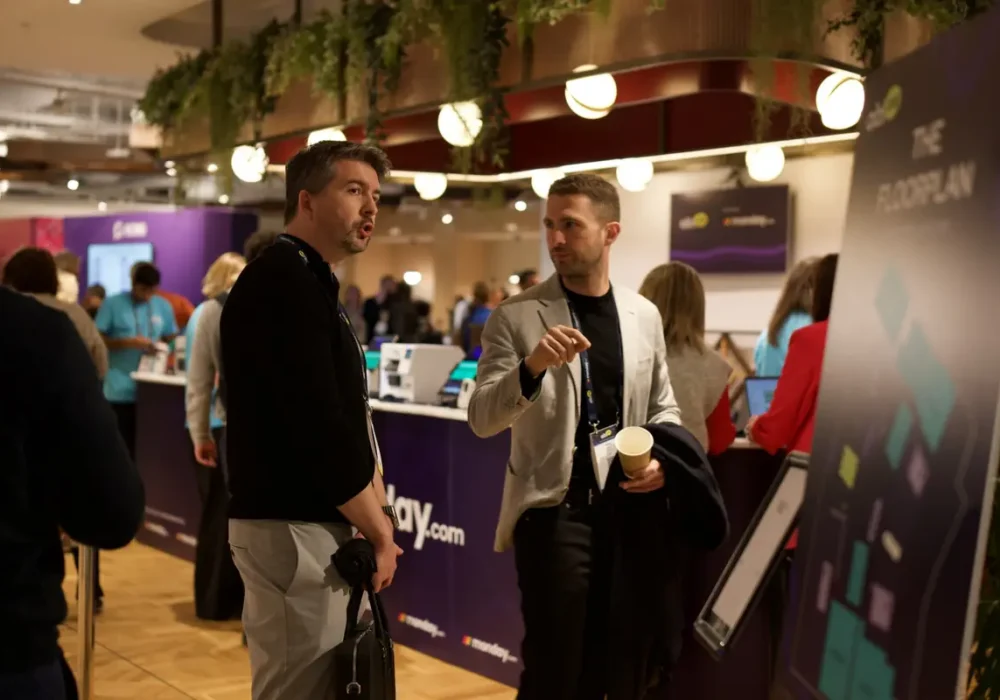
Account-based marketing (ABM) for an AI vendor means choosing a short list of UK organisations that fit. You then...
Read more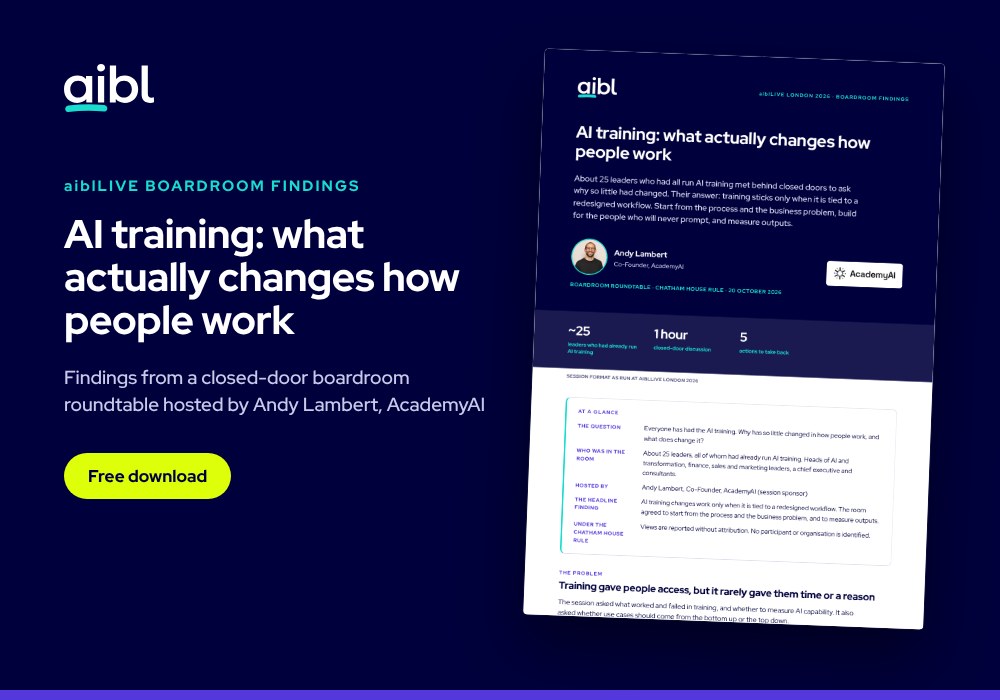
AI tools go unused because they are added to jobs that haven't changed. People get a licence and a training...
Read more
Our AI kept fewer customers than our humans PLUS: 61% of AI wins followed a failure...
Read moreGet ahead with the most actionable insights, playbooks and real-world AI use cases you can adopt right now, in your inbox every week