
workforceLIVE
AI for people leaders. The technology is a given. The variable is your people.
A morning in the room
It was never the technology
One conclusion held across every session. The constraint on AI value is not the tools. It is whether people trust the technology, whether they are equipped to think with it, and whether the culture is honest enough to act on what it reveals. Every one of those levers sits with people leaders, not IT.
Richard Breeden opened with the aibl AI adoption research, 755 UK business leaders surveyed. The signal was clear: where an organisation’s five most senior leaders agreed on the top AI priorities, 79% reported a positive return. Where only one did, fewer than one in three did. Clarity, not technology, was the dividing line.
Three sessions, three people leaders

Dr Laura Weis

Kerri O’Neill

Matt Phelan
What the main stage said
Trust comes before adoption
People will not meaningfully use AI in a culture where they do not feel safe, and trust is built through dialogue, not policy. Weis introduced the M-shaped professional: deep expertise in one discipline plus real fluency across the ones next to it. She also flagged an inclusion risk: women are less likely to publicly claim AI outputs as their own, so adoption designed without inclusion widens existing gaps.
You cannot manage your way through this
Staff now live through an average of nine significant business changes a year, up from two or three. Leaders are usually months ahead of their teams in processing a shift, so what feels like momentum at the top can feel like chaos in the middle. The emotional response to change is data, not noise. What works: modelling AI use visibly, small visible pilots with real feedback, and transparency over polished certainty.
We are automating the path to leadership
Young people report the lowest happiness at work of any age group measured, partly because automating entry-level tasks removes the scaffolding that let junior staff learn their craft. Speed without a matching investment in wellbeing produces burnout, not performance, and neurodivergent employees are among both the heaviest AI users and the most at risk. Design roles, do not just grant access.
Three places clarity breaks down
Strategic clarity: where all five senior leaders agreed on AI priorities, 79% saw a return. Alignment: highly aligned organisations were far more likely to report efficiency and revenue gains, and 40% of technology leaders named the handoff between teams as the main failure point. Capability: where people were very well equipped, 72% saw a return, against 32% where they were only somewhat equipped.
Five rooms, held off the record
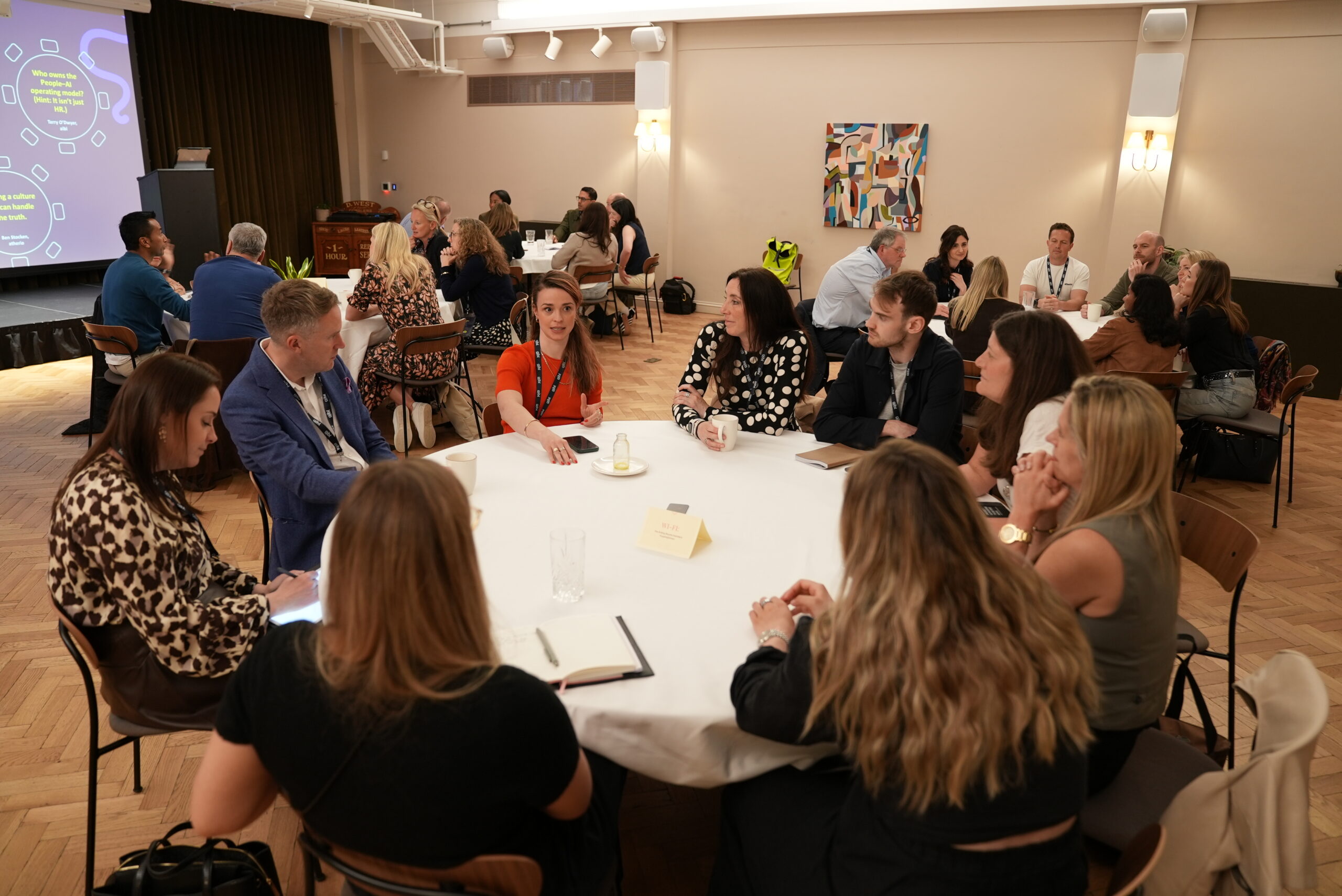
Five roundtables ran under the Chatham House rule, which is why the conversation was franker than the average conference. The themes are shared freely; nothing is attributed.
A culture of experimentation
Many organisations encourage experimentation while restricting access, creating a two-tier workforce and pushing usage into the shadows. One leader ran a no-consequence amnesty, asked staff to declare their unofficial AI use, then redesigned the access model around what they found. Curiosity, not seniority, predicted who adopted best.
Who owns the people-AI operating model?
The room separated little AI, the everyday tools individuals already own, from big AI, the strategic redesign of how work is done. HR is often handed change programmes it was not resourced to lead, while technology teams make people decisions without HR in the room. Middle managers hold the knowledge that makes deployment work and are overlooked almost everywhere.
From using AI to thinking with AI
Usage is easy to measure and easy to mistake for progress. Capability is the harder shift, from using AI on existing tasks to reimagining how the work could be done. What is working in practice: home use cases as the on-ramp, one hour a month blocked for AI learning, a trusted champion per team, and reverse mentoring at every level.
A culture that can handle the truth
AI surfaces every inefficiency in how an organisation works, and the question is whether the culture is honest enough to act on it. People are running faster in different directions, and leaders and staff are rarely at the same point on the change curve. The group landed on three responses: make space for retrospectives, reward experimentation, and prepare people before AI surfaces hard truths.
Talent, tech or taboo?
This table went looking for the real blocker to AI adoption, and tested whether it is talent, technology, or something the organisation will not say out loud. The conversation tracked the day’s wider verdict: the hardest barriers were rarely the technical ones.
Senior people leaders from across the UK
A cross-section of HR, people and L&D leaders from organisations including:
workforceLIVE sponsors



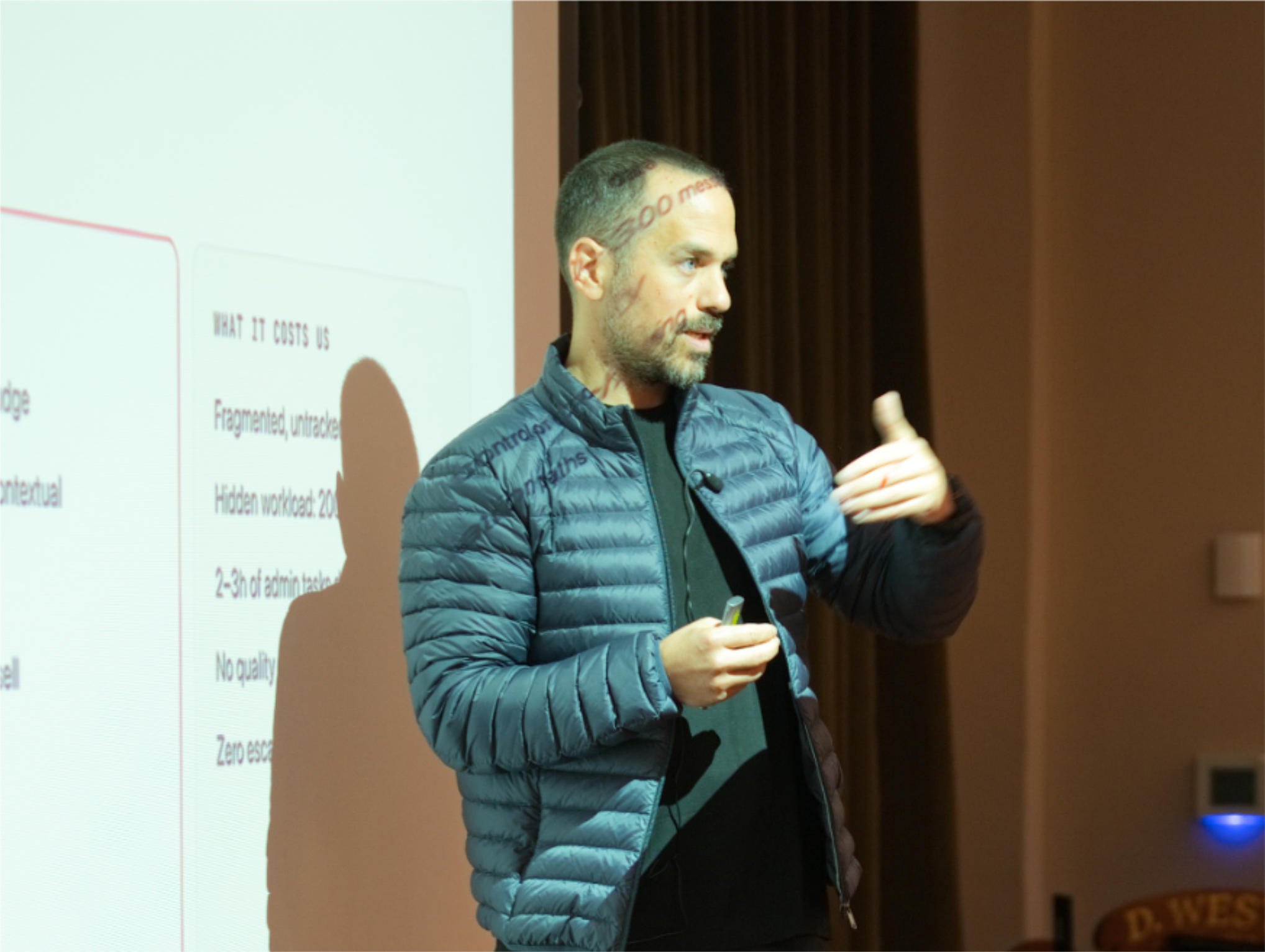
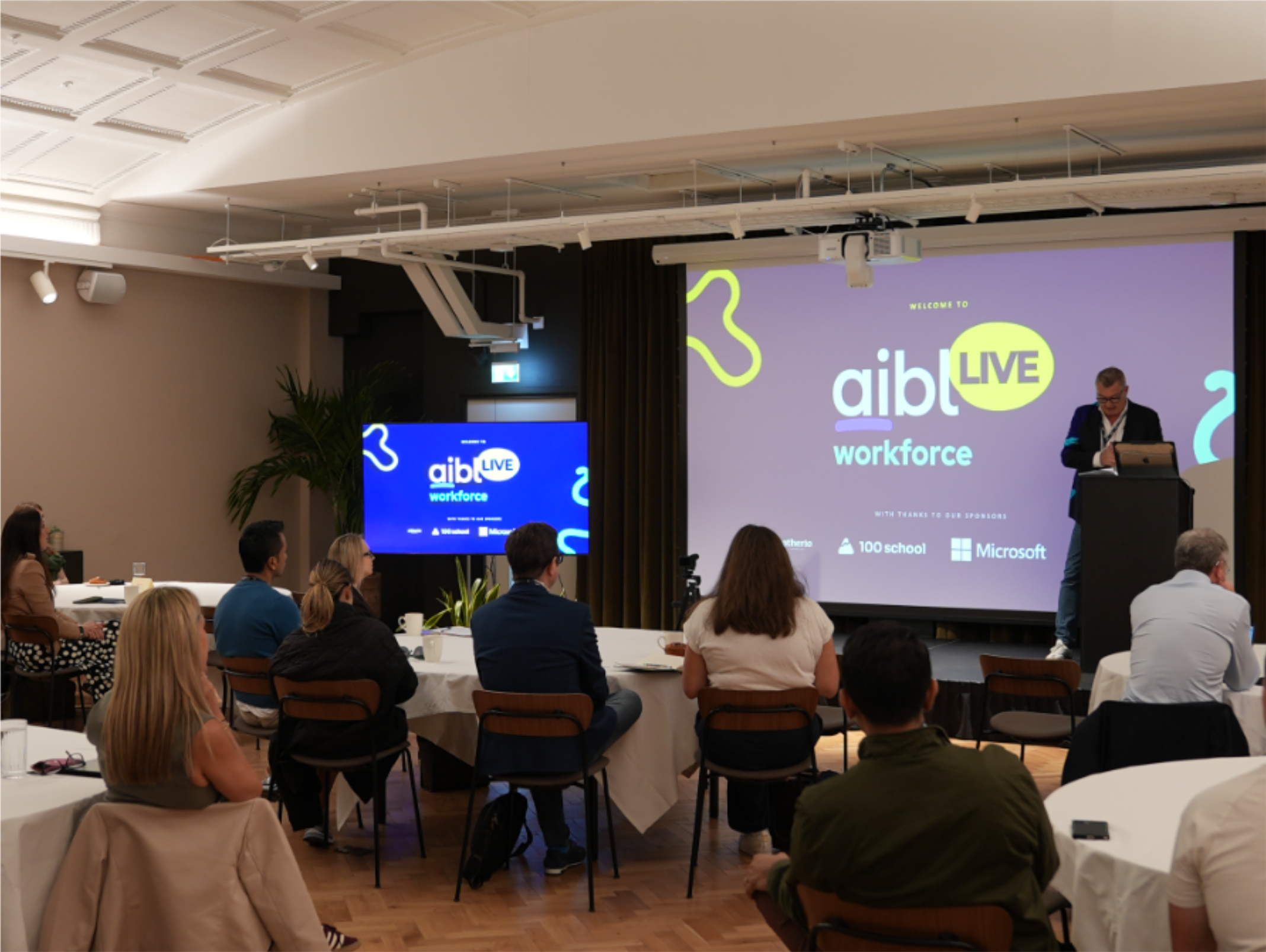
The day, in the room


Get the full findings report
Every session and roundtable, the research behind them and what to do this quarter, as a designed PDF.
Download the report
More from aibl
The research
workforceLIVE drew on the aibl AI adoption survey of 755 UK business leaders. Read the wider findings on where UK organisations really stand on AI.
aiblBRIEF
Practical AI adoption for people leaders, in your inbox each week. What is working, what it costs and how to roll it out.
workforceLIVE, in brief
What was workforceLIVE?
A morning in the aibl Leadership Series for senior HR, people and L&D leaders, held on 6 May 2026 at The Arding Rooms in London. Three main-stage sessions and five off-the-record roundtables on putting AI to work through people.
Who was in the room?
Senior people leaders from UK organisations including Domino’s, McLaren Racing, Oatly, Ageas, Inchcape, Walkers, Manchester United, TSB, Alexander McQueen and Creditsafe.
Can I read the full write-up?
Yes. Request the findings report above and we will send you the full designed PDF, covering every session and roundtable, the research behind them and a short set of actions for people leaders.
When is the next aibl event?
aiblLIVE returns to London in 2027. Register your interest to be first to hear the dates and tickets. More Leadership Series write-ups are on the way.
The conversation continues at aiblLIVE
aiblLIVE returns in 2027, a full day for senior UK leaders putting AI to work, with the peers two steps ahead of you in the room.