
Senior sales, marketing and revenue leaders
AI for sales, marketing and revenue leaders. The tools are everywhere. The revenue impact is not.
Get the full findings report
Every session and roundtable, the research behind them and what to do this quarter, as a designed PDF.
A morning in the room
AI is the operating layer now. Trust and data decide if it pays.
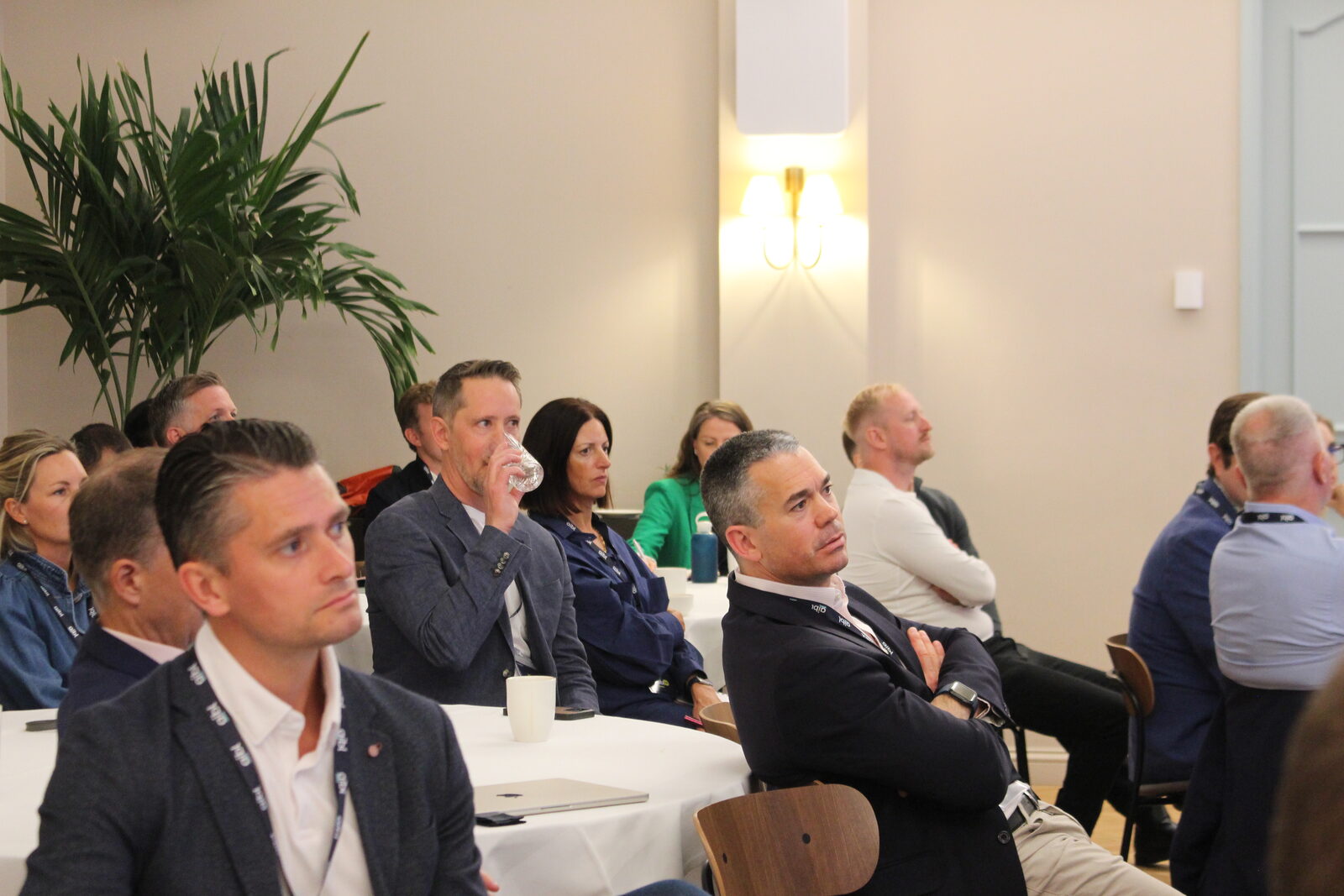
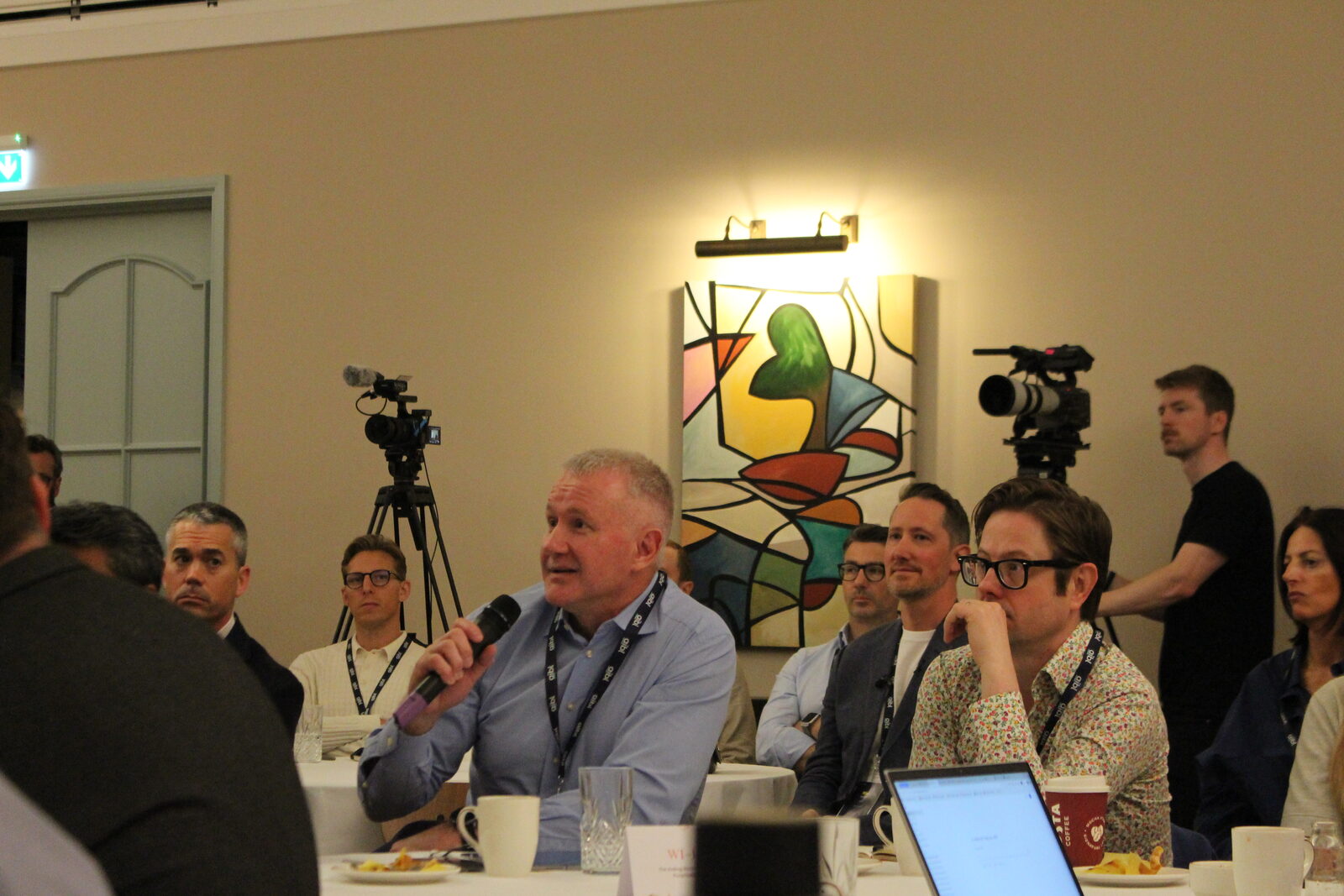
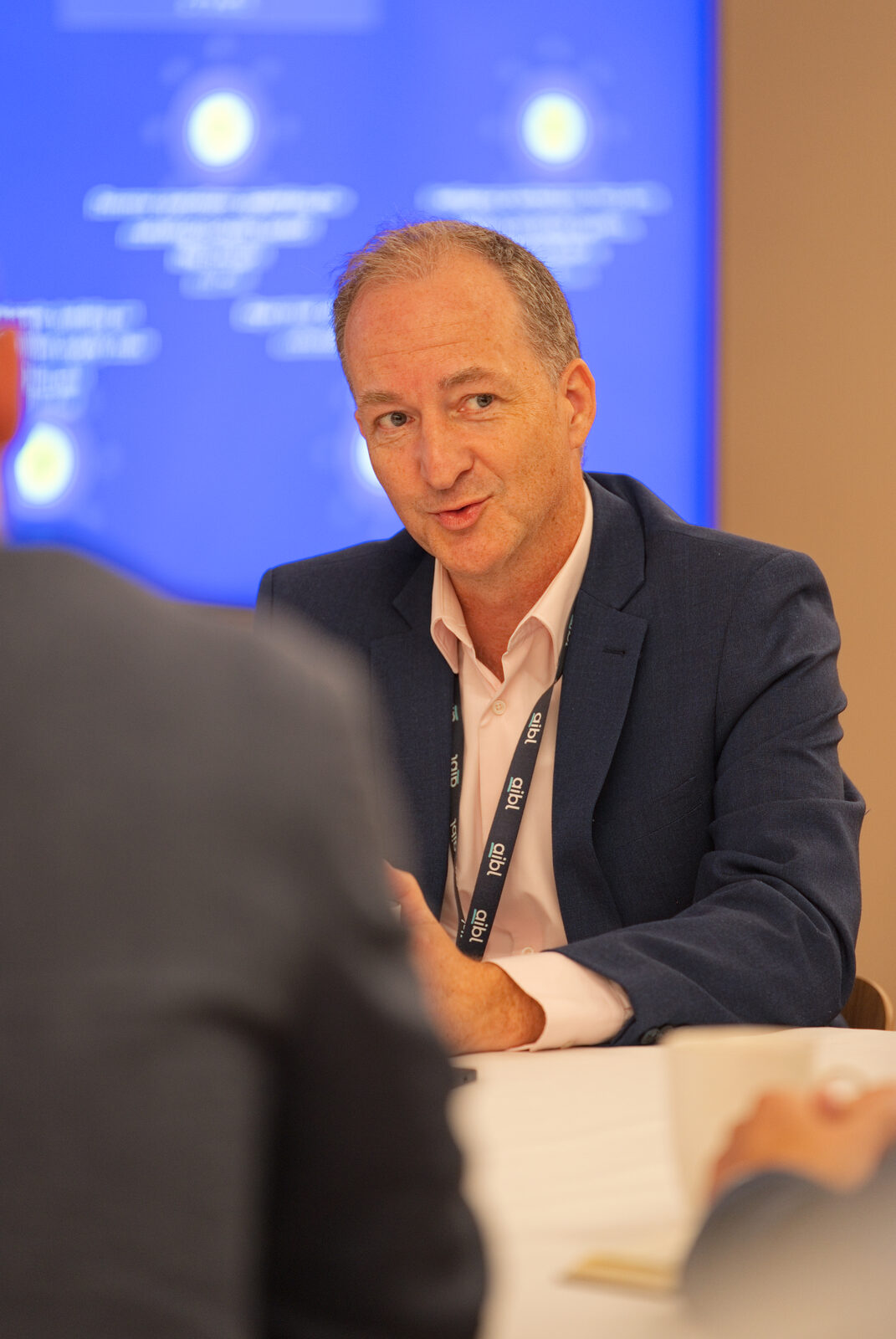
This was not a room arguing about whether AI matters, and it was not a room high on its own supply. It was a room of operators comparing notes on what actually works in the commercial function, where it breaks, and what they are still nervous about.
Four points ran through nearly every session. AI is moving from a speed tool to the operating layer under the whole campaign. Trust and transparency, not capability, are the real constraint: disclosed AI can build trust, undisclosed AI destroys it the moment it is found. The data foundation, not the model, is where most teams are stuck. And as routine work automates, the human premium, real judgement and a genuine conversation, goes up, not down.
“Do not start with AI. Start with your biggest blind spot, work out the challenge you most need to solve, then build the agent that solves it.”
Five talks from the commercial front line

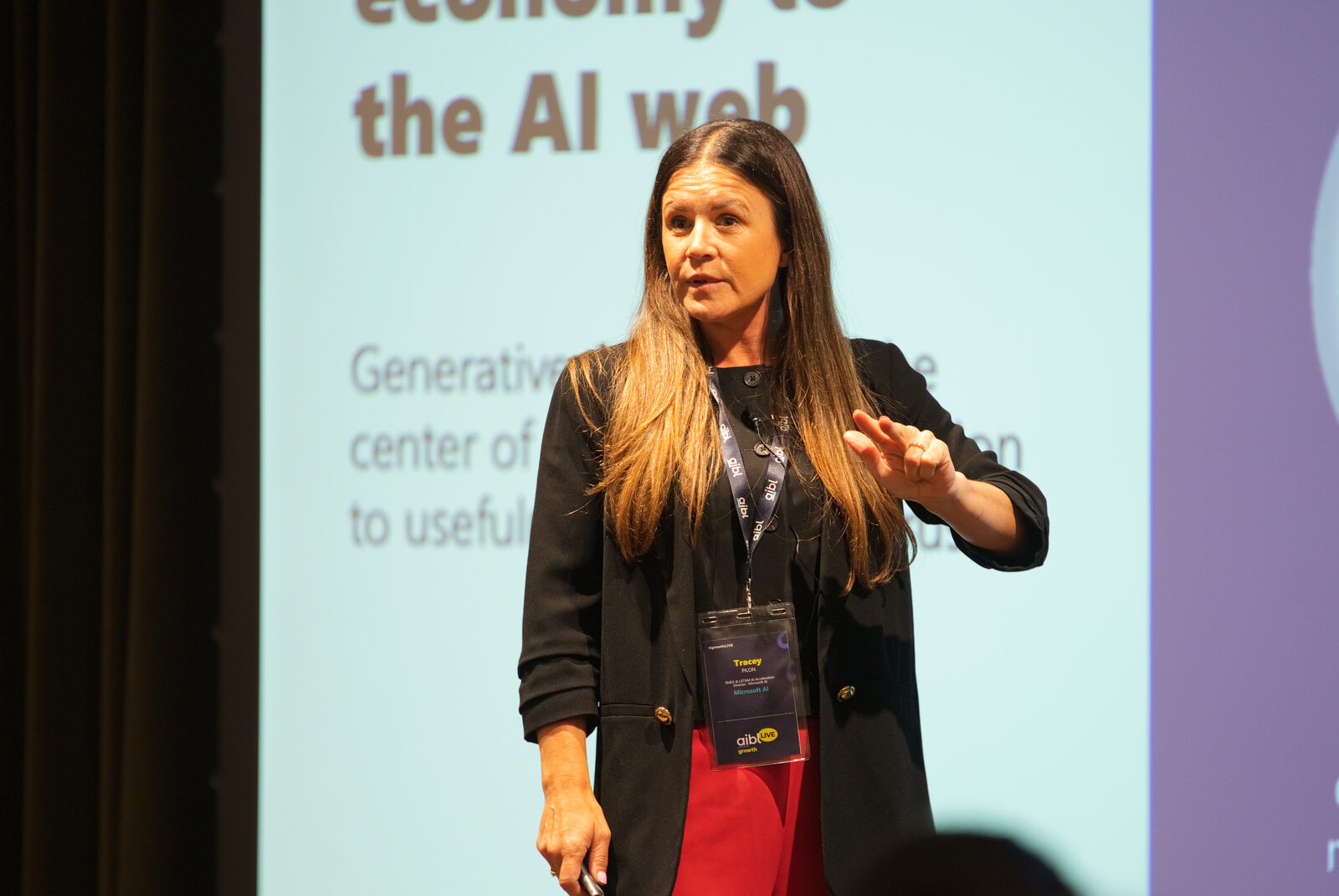
Tracy Pilon

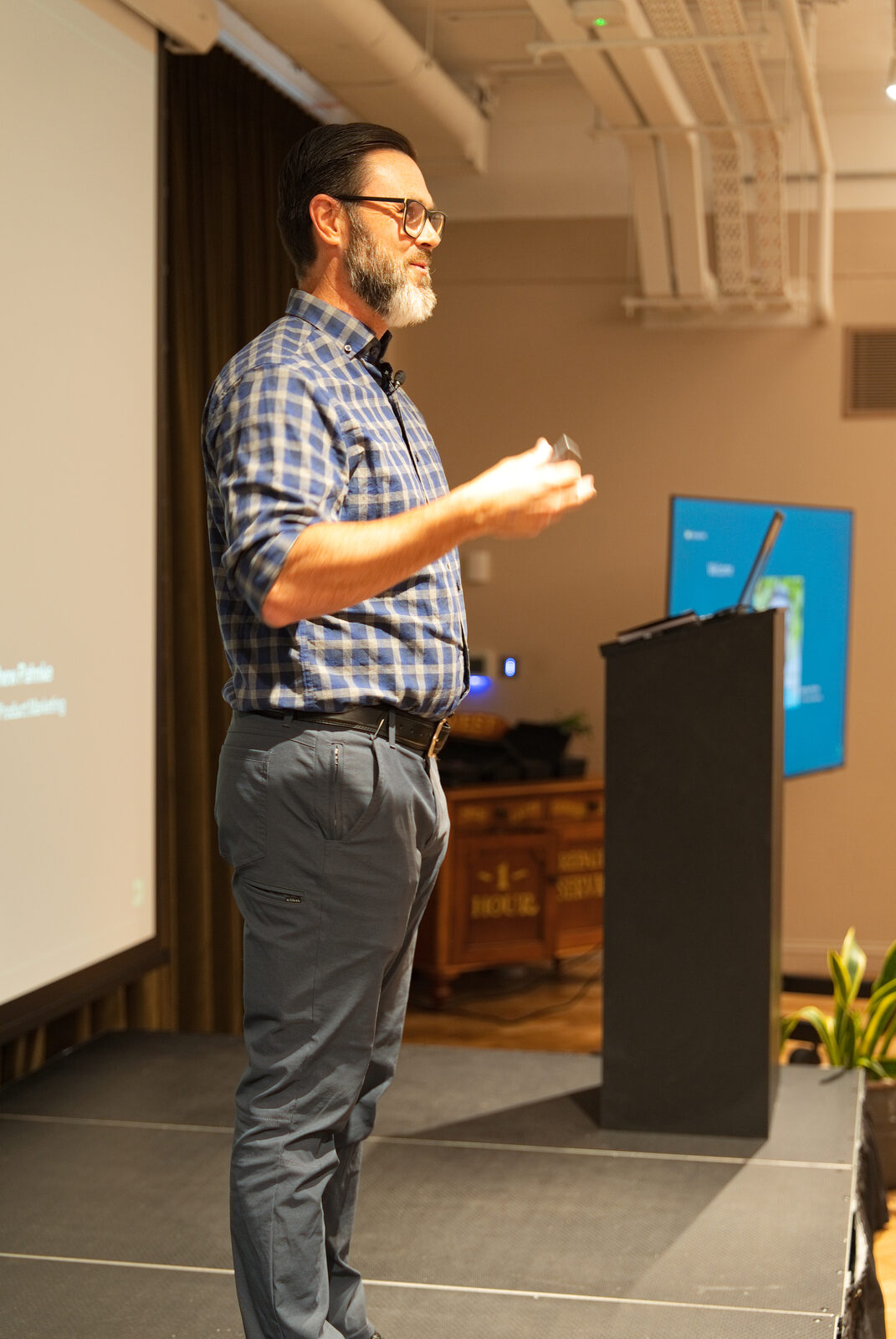
Matt Pahnke

Achilleas Kasimidis

Mike Pritchett

TK Abdul
What the main stage said
The Race to Zero UI
Customers now let an AI assistant do their searching, which quietly breaks the funnel most teams were built around. Perception is no longer enough: the assistant judges a brand on trust signals, reviews and plain usefulness, and conversations now run at twenty-plus words, not a three-word search. Privacy and a human approval step are the make-or-break.
From data to impact
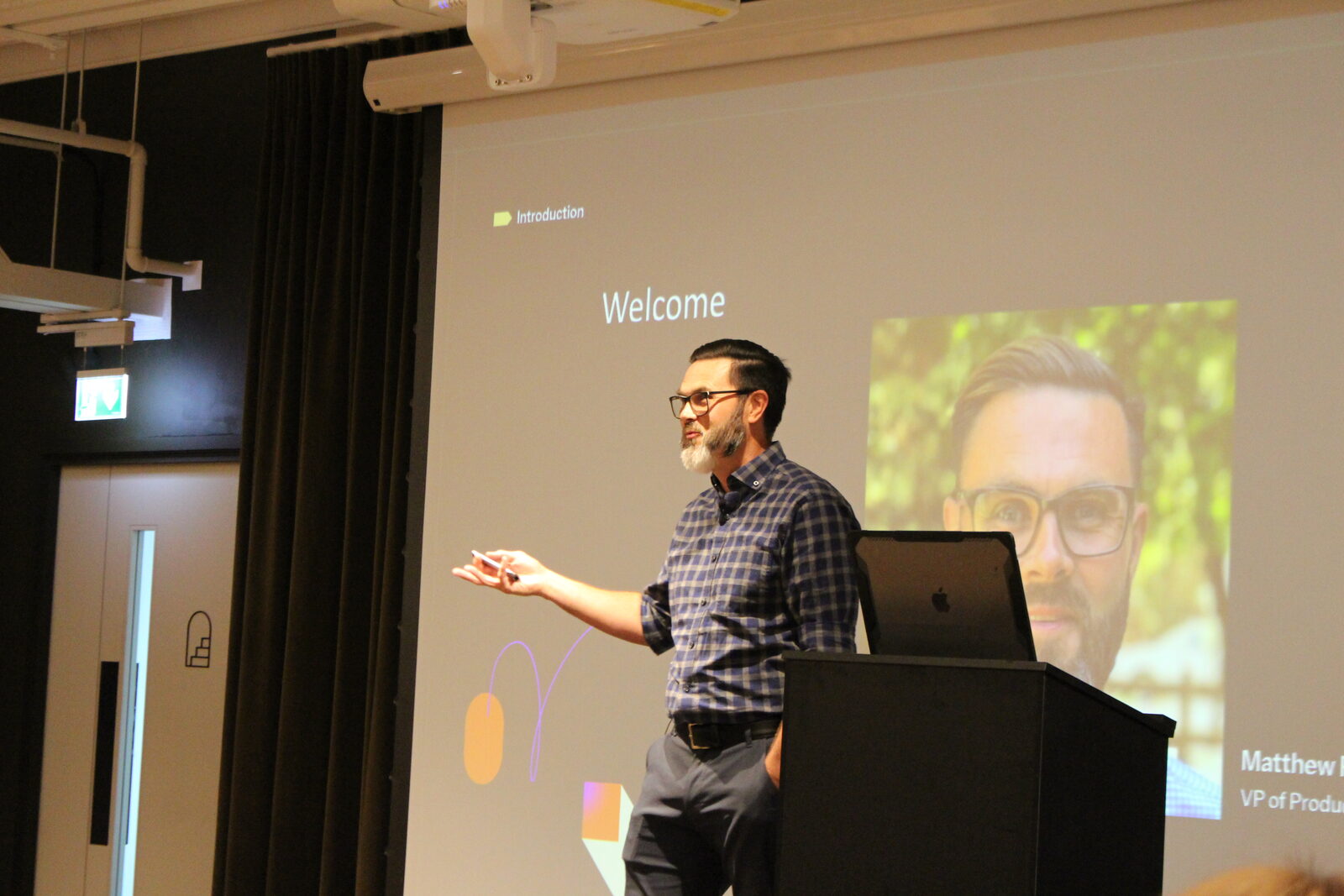
AI is moving from a speed tool to the operating layer of marketing. Pahnke framed a campaign as a loop of five stages, gather, organise, create, automate, optimise, and the value is finding your own weak stage rather than assuming the whole thing is broken. Every stage depends on clean, unified data brought close to the tool that runs the campaign. None of it works on dirty data.
Two blind spots, two agents
Running global revenue operations with no code, Kasimidis built two agents himself in weeks. A WhatsApp co-pilot reads every inbound message, works out intent and urgency, and has already saved account managers two to three hours a day. A listing scout scores commercial property every morning for about fifty euros a month. Build fast, bring legal in to make it compliant after.
GTM Hyperhumans
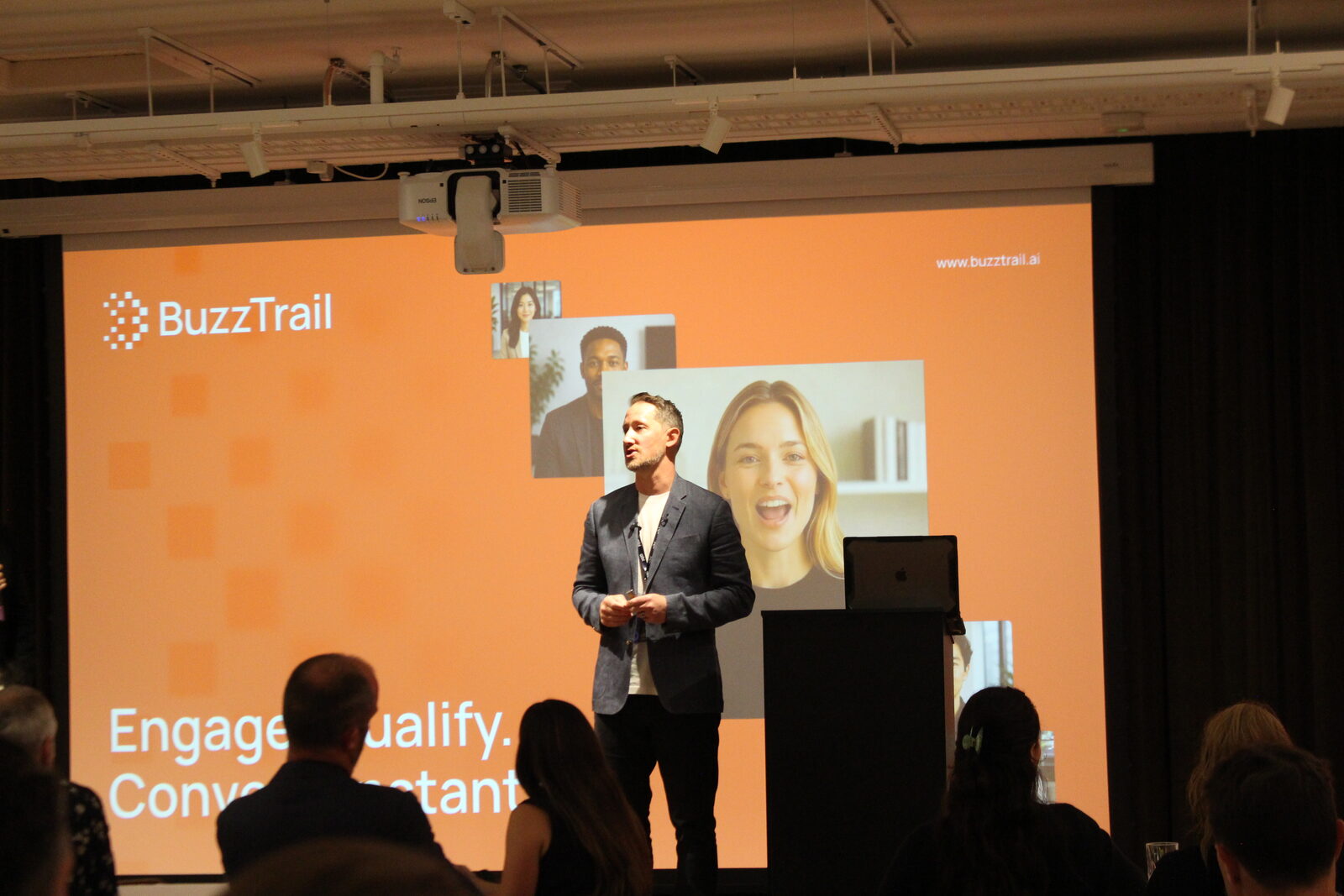
The “book a demo” experience is broken on both sides, so most buyers never reach the button. Their answer: AI video avatars, openly labelled, that engage and qualify inbound interest in real time, not cold outbound. The bigger prize is the data, a rich late-night conversation captures far more intent than a form, and the discipline is keeping the avatar in its lane and handing complex deals to a human.
How Google is using Google AI
Google now runs large parts of its own business on AI. Close to three-quarters of new code is AI-generated and engineer-approved; a security agent cut threat-mitigation time by over ninety per cent; a campaign agent saved one marketing team an estimated eighteen thousand hours in a year; lead screening lifted conversion fourteen per cent in weeks. The pattern, not the tool, is the point: pick a repetitive, high-effort task and let AI take it.
Five rooms, run twice, off the record
Each roundtable ran twice so people could join two. They were held under the Chatham House rule, which is why the conversation was franker than the average conference. The themes are shared freely; nothing is attributed.
Data readiness
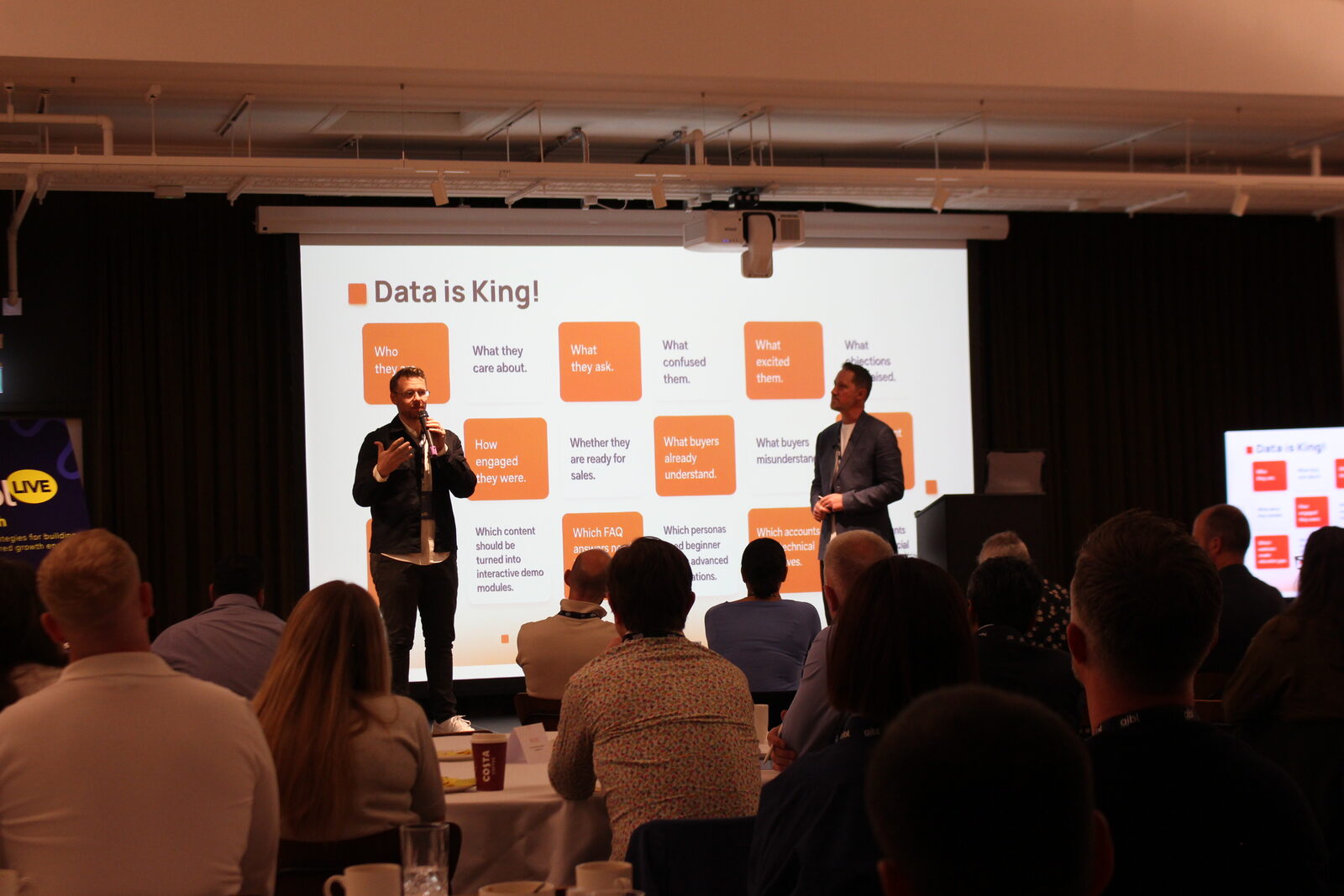
The plainest-speaking tables of the day. Asked to score their own readiness, people landed around three to five out of ten, and named the gap between where leadership thinks the business is and where it actually is. The teams further along enriched their data, scored their confidence in each record, and started with small, high-trust use cases rather than a big-bang rebuild.
Revenue operations
The most practical tables on tools and workflow. The marketing-to-sales handoff was widely called broken. The clearest wins were consistent: pre-call research, call recording and coaching, and honest pipeline scoring. An unbiased AI read of deal health produced franker conversations than managers were used to, and reps came round once they saw it helped rather than judged them.
Intelligence architecture
The gap between tool-level efficiency and business strategy. People had plenty of individual tools delivering local gains, but joining them into a connected system fell apart, usually on a broken or legacy data layer. Shadow AI recurred: mandated tools sitting unused while teams quietly used what they preferred. Bolting AI onto an out-of-date process rarely works as well as redesigning around it.
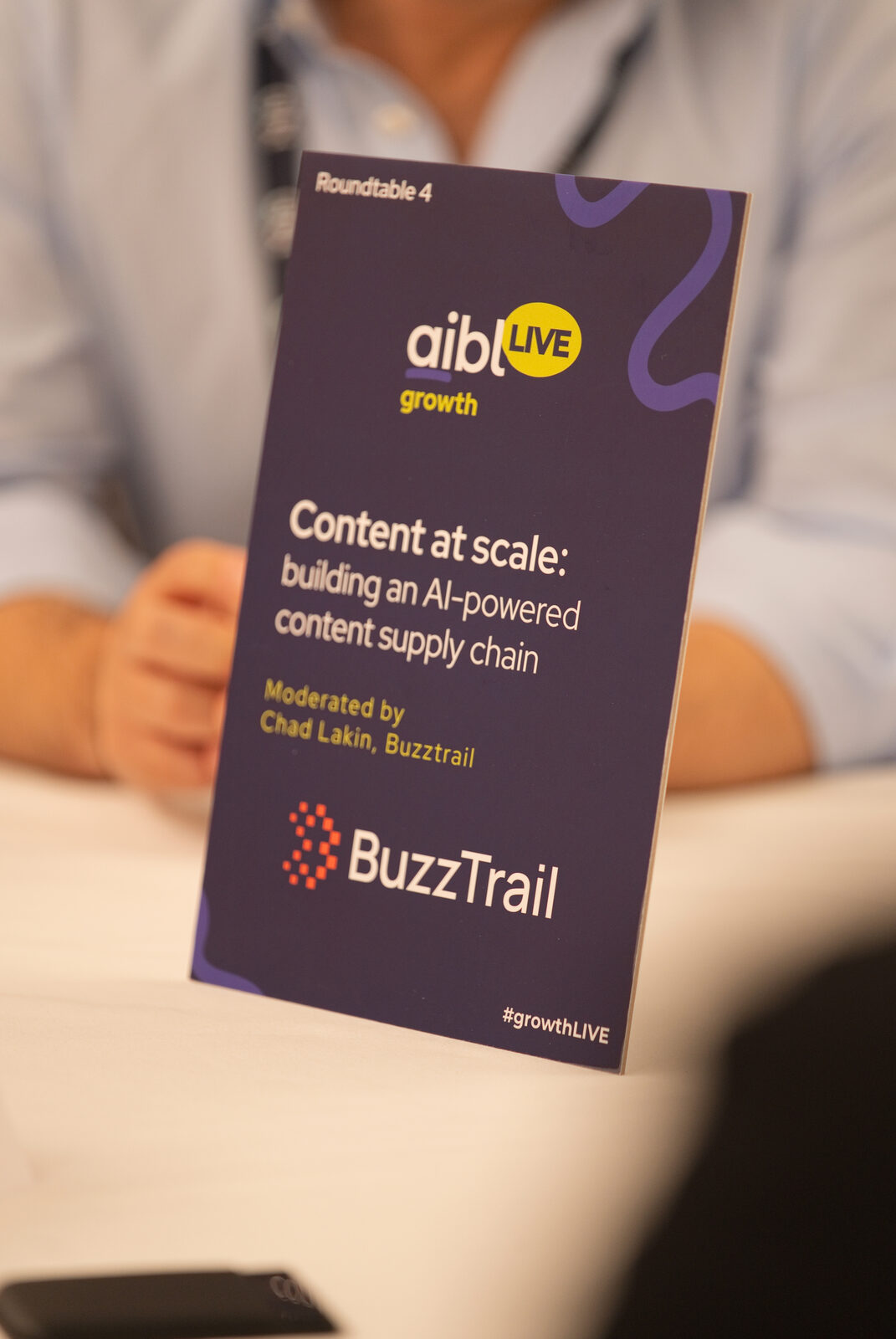
Content at scale
Efficiency versus generation. AI is very good at compressing repetitive production, reformatting one human-made piece across channels and languages, and weaker as a pure volume play, which produces slop audiences now recognise on sight. The teams getting it right built guidelines, keywords and approved references into a single tool and kept a human in the loop for judgement.
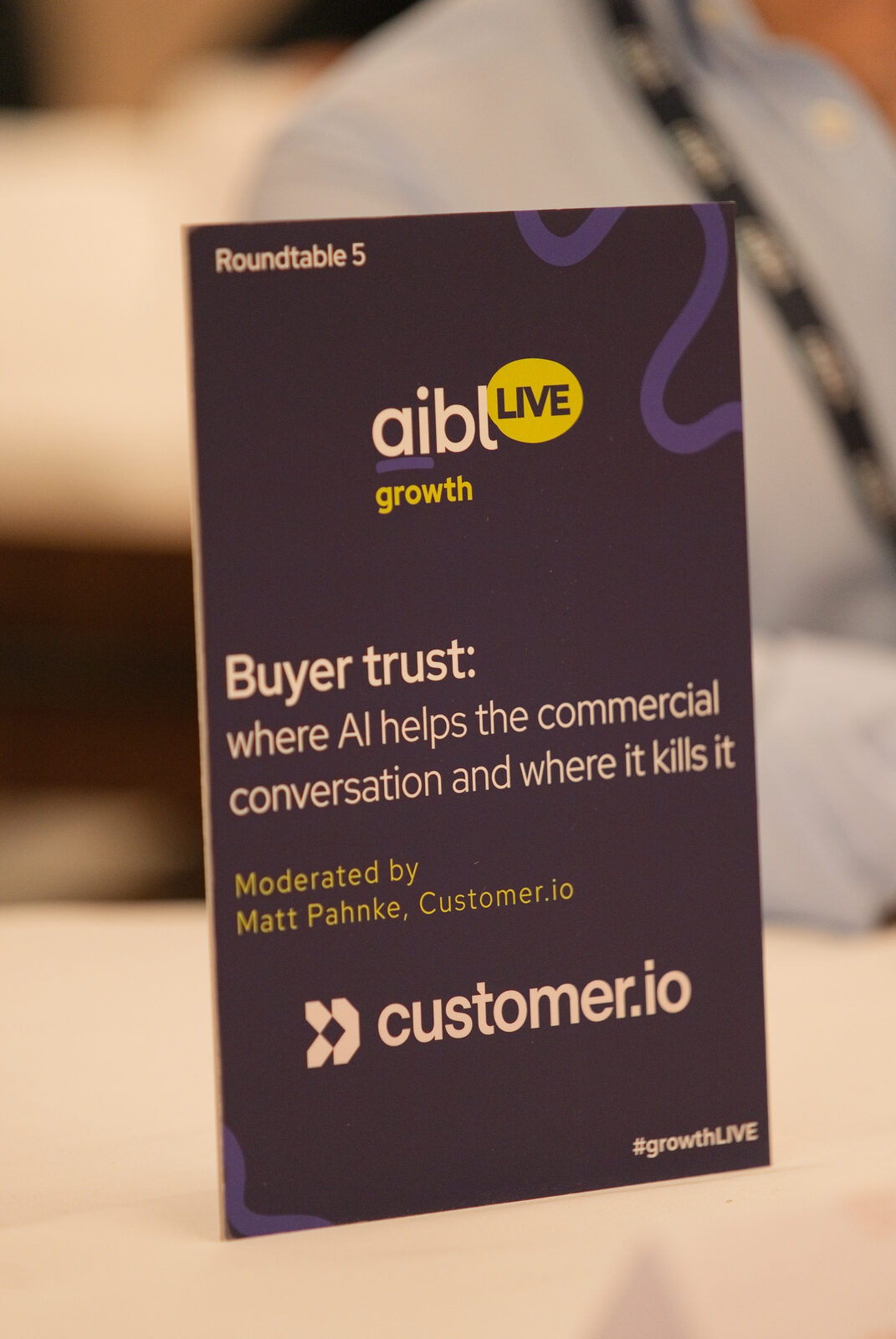
Buyer trust
The most reflective tables. The shared view was firm: disclosed AI can build trust, undisclosed AI destroys it the moment it is found. People are comfortable with AI answering their questions but wary when it starts asking them near a decision. As fluent AI output becomes samey, authenticity and a real peer referral go up in value, not down.
Senior commercial leaders
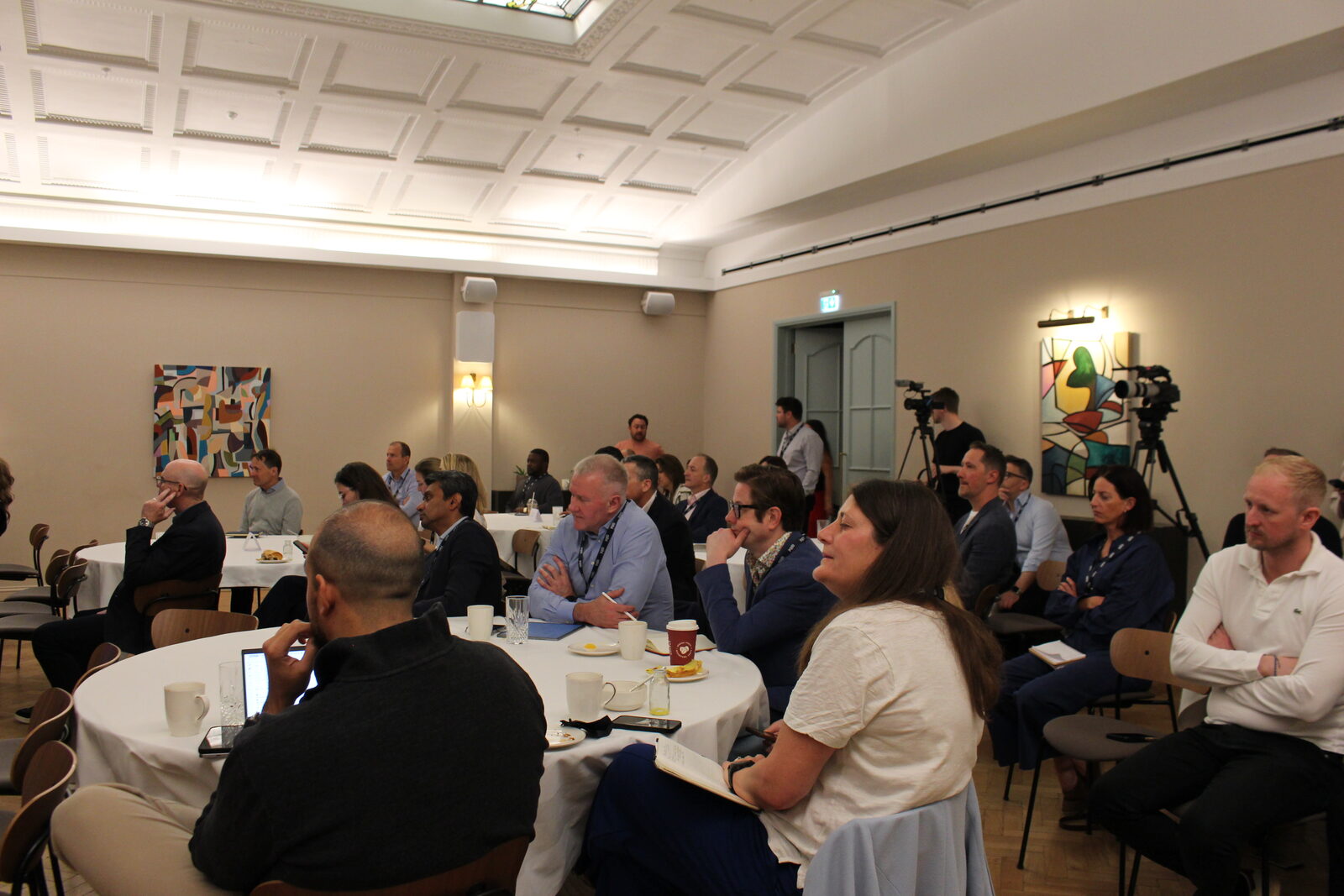
A room of around fifty senior commercial operators, mostly UK mid-market with a handful of larger platforms. The job titles in the room:
growthLIVE sponsors


The day, in the room
Colt Technology Services, Chief Commercial Officer
A must for executives navigating AI strategy and implementation.
VOOH, VP of marketing
Thanks to the AI For Business Leaders team for hosting a great event… cutting through the noise with some genuinely useful insights…
More from aibl
The research
aibl runs the State of UK AI Adoption research across 755 business leaders. See the wider findings on where UK organisations really stand on AI.
aiblBRIEF
Practical AI adoption for commercial leaders, in your inbox each week. What is working, what it costs and how to roll it out.
growthLIVE, in brief
What was growthLIVE?
The sales, marketing and revenue edition of the aibl Leadership Series: an invitation-only morning summit held on 10 June 2026 in London, with five main-stage talks and five off-the-record roundtables on putting AI to work in the commercial function.
Who was in the room?
Around fifty senior commercial leaders, mostly UK mid-market: CMOs, CROs, VPs of marketing and sales, commercial directors, heads of growth and RevOps, and founders.
Can I read the full write-up?
Yes. Request the findings report above and we will send you the full designed PDF, covering every talk and roundtable and the themes that ran through the day.
When is the next aibl event?
aiblLIVE returns to London in 2027. Register your interest to be first to hear the dates and tickets. More Leadership Series write-ups are on the way.
The conversation continues at aiblLIVE
aiblLIVE returns in 2027, a full day for senior UK leaders putting AI to work, with the peers two steps ahead of you in the room.