
aiblLIVE London 2026: what our AI conference taught us about making AI work
aiblLIVE London 2026 was the AI conference we spent a year building, and on 20 October it came together. The...
Read more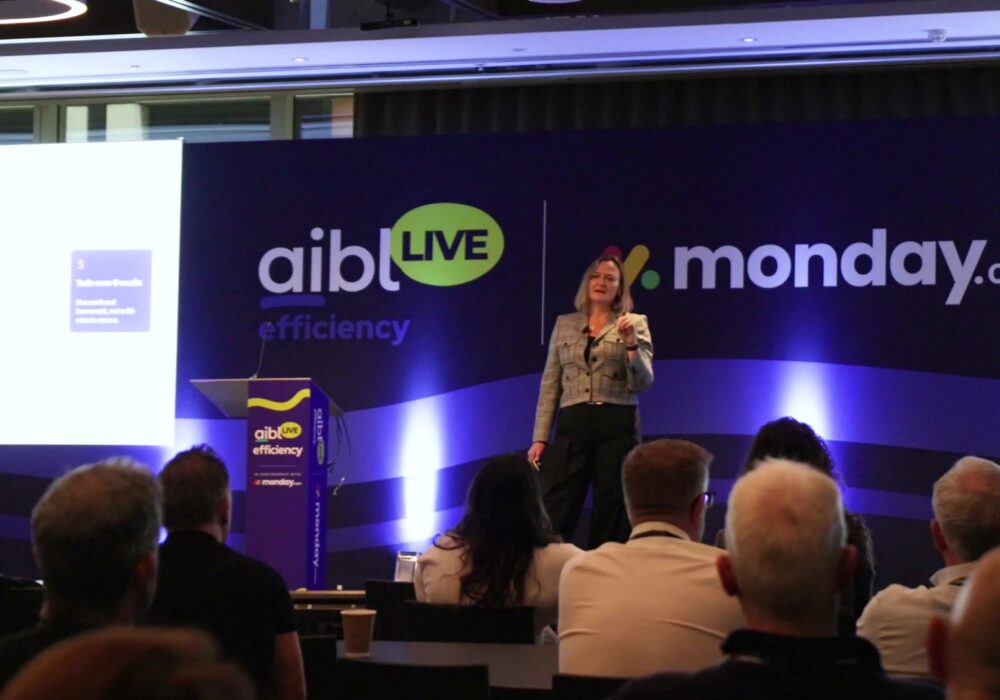
aiblLIVE London 2026 was the AI conference we spent a year building, and on 20 October it came together. The rooms were full, and the conversations carried on long after the talks finished. The sessions kept returning to the same few lessons on making AI work, and almost every one is now a free download.
aiblLIVE London 2026 was a one-day AI conference for UK business leaders, held at Convene Sancroft in London on 20 October 2026. It ran more than 60 sessions across five tracks: Growth, Workforce, Customer, Efficiency and AI Infrastructure. More than 70 speakers took part, and every main-stage session ran TED-style: 15 minutes, then 5 minutes of questions.
That 15-minute rule was one of the first decisions we made. A year ago, John, Terry and I started planning the day. We wanted every session to show what an organisation had actually done with AI, and what it delivered.
So the programme was built around 48 case studies and demos, 12 hands-on workshops and four boardroom roundtables. The workshops ran for 45 minutes. The roundtables ran for an hour under the Chatham House Rule, so senior leaders could speak freely.
Twelve months of work went into that one day. I’m delighted, and a little relieved, to say it was the event we hoped it would be.
It was busy from the moment the doors opened at 8am, and it stayed that way. More than 900 leaders came on the day: three in four at director level or above, and 43% in the C-suite. That told us the subject matters to people right now.
Some of the best conversations were planned. Boardy, our AI networking partner, spoke to delegates before the event. It then introduced people working on the same problems, before and during the day.
Others happened by chance, in the coffee queue, around the expo and in the gaps between sessions. For me, those unplanned conversations were what made the day.
The sessions dealt with problems organisations are working on this year. Speakers covered AI agents in customer service and how brands show up in AI search. Others took on what the EU AI Act means for training, and how to test a chatbot before customers see it.
The organisations getting results had done the unglamorous work first. They measured real use rather than licences, fixed the process before adding AI and sorted their data before building agents. They also kept a person at the decision point, and used AI to grow what their teams could do.
Each of those came down to decisions the leadership team made together, about process, data and people as much as technology.
Terrapinn’s first AI rollout ticked every box, yet 51.5% of users were dormant or very low users. Sharon Roessen, its Chief Operating Officer, explained why the second attempt worked: the team fixed the process before adding AI. Read the Terrapinn case study.
Simon Hodgkinson, AI Product Owner at the British Red Cross, put the same point more bluntly.
“90% adoption with no changes is not as good as 30% who wouldn’t give it back.”
Simon Hodgkinson, AI Product Owner, British Red Cross
Read the British Red Cross case study.
Anca Pintilie of JP Morgan Chase described a project from her time at Amazon. Six global marketing teams were running 13 operating models. Her team spent six months finding out how the work really happened, then cut them to three. Read the operating model case study.
Dr Laura Weis, AI and Transformation Lead at WPP, explained why the order matters. AI amplifies the system it lands in, and AI used to fix something already broken usually fails. Read the WPP case study.
Zencargo’s first five automation projects almost all stalled. Josh Clement-Sutcliffe, its AI and Automation Lead, said the freight forwarder cut four and rebuilt around data, trust and operator feedback. Files per head then rose by 40%, from 150 to 210 shipments per operator. Read the Zencargo case study.
Thames Water rewrote its knowledge articles before its AI assistant could use them. Repeat contacts fell by 6%. “You do need to make your articles AI-friendly, not human-friendly,” said Toni Jarvis, Head of Agent Experience. Read the Thames Water case study.
Royal Mail found its AI claims checks treated the presence of an image as proof. It could confirm a picture had been uploaded, but not what it showed. Promise Akwaowo, its AI Automation Lead, explained how the redesigned process is built so every mismatch falls into a defined exception. Read the Royal Mail case study.
Marshmallow handed over to its AI customer service agent in stages. Vik Lakhotia, its Group Product Manager, said the team went from reviewing every chat to a 4 to 5% sample. Tuning raised the accuracy of its AI judge from 83 to 98%. Read the Marshmallow case study.
CityFibre went from 10,000 to a million homes connected a year with no extra headcount, according to David Tomalin, its Group Chief Technology Officer. Read the CityFibre case study.
At SHL, a customer service bot absorbed work equal to 35 staff without a single redundancy. At Bidwells, the pitch win rate rose from 40% to 60% in a year. Read the SHL case study or the Bidwells case study.
You can read them free in the aiblLIVE 2026 session library. It holds 46 case studies, 10 workshop guides and two boardroom findings reports so far, with more to follow. You can filter them by track or by format.
Each case study is a short PDF. It opens with an at-a-glance summary. Then it sets out what the organisation did, the numbers behind it and what you could take back to your own team.
Five tracks ran at once on the day, so even the people who were there saw only part of it. I’d suggest starting with the two or three sessions closest to the problem on your desk. All our case studies, including interviews from across the year, are in AI case studies.
aiblLIVE 2027 takes place on Tuesday 13 July 2027 at the InterContinental London, The O2. The format stays true to 2026, with short sessions built on real numbers and time for the conversations in between. Register your interest in aiblLIVE 2027 and we’ll keep you posted as the programme takes shape.
aiblLIVE is aibl’s annual one-day AI conference in London for UK business leaders. The 2026 event ran 60 sessions across five tracks on 20 October 2026 at Convene Sancroft. It focuses on what organisations have actually done with AI and what it delivered, with no session on the main stages longer than 15 minutes.
Yes. The case studies, workshop guides and boardroom findings reports are free to download from the aiblLIVE 2026 session library. Each one is a short PDF that sets out what the organisation did, the numbers behind it and the actions other teams could take. You fill in a short form to get each download.
aiblLIVE is for senior leaders responsible for AI in UK organisations: chief executives, COOs, CFOs, CHROs, CMOs, CIOs and the heads of AI and transformation who work with them. The sessions are built around their questions, such as how to get adoption beyond a pilot and how to show a measurable return.
aiblLIVE 2027 takes place on Tuesday 13 July 2027 at the InterContinental London, The O2. You can register your interest on the aiblLIVE 2027 page to hear first about speakers, sessions and tickets as the programme takes shape.
aiblLIVE London 2026 was the AI conference we spent a year building, and on 20 October it came together. The...
Read more
Almost every UK organisation now has AI running somewhere. Very few have scaled it. In aibl's survey of 755 UK...
Read more
Technology and IT teams get more from AI than any other function. In aibl's survey of 755 UK mid-market business...
Read moreGet ahead with the most actionable insights, playbooks and real-world AI use cases you can adopt right now, in your inbox every week