
Executive roundtables and CxO events for AI vendors
An executive roundtable works when it gets the right twelve people to talk honestly about a problem your product...
Read more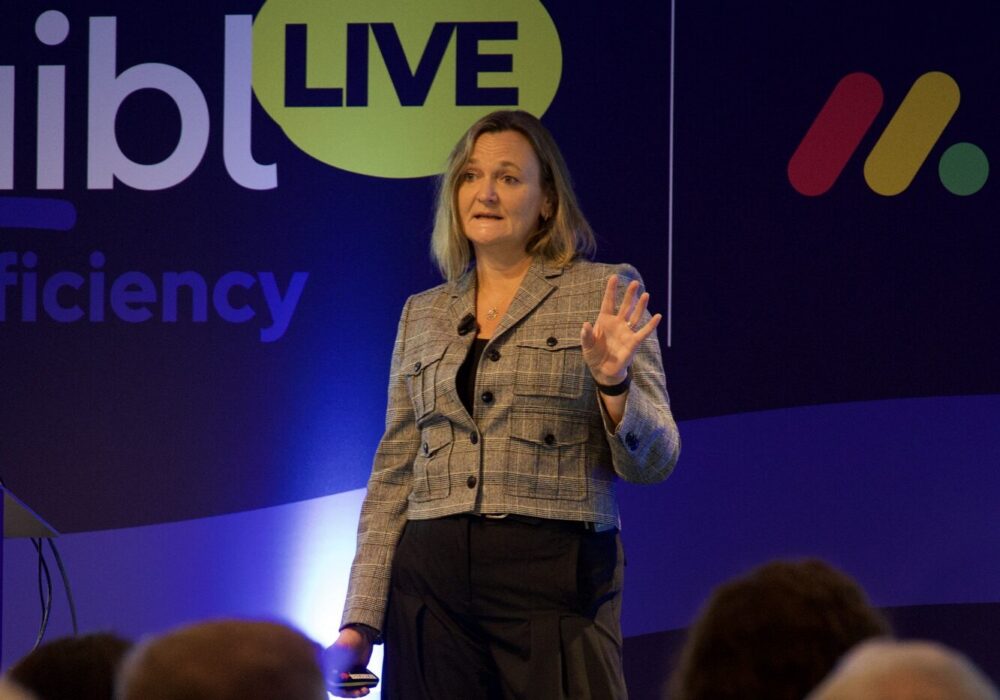
When its first AI rollout stalled, events company Terrapinn stopped handing out tools. COO Sharon Roessen explains why it started again with one job managers already had to do.
In February 2025, Terrapinn’s board decided the company should lead its industry in AI, and handed the job to Sharon Roessen.
She followed a familiar playbook. Terrapinn hired someone with AI in their job title, put around 40 senior leaders through AI literacy training, bought ChatGPT and Gemini licences, and ran workshops to find use cases. The assumption was that leaders would pass it on and staff would start building their own GPTs and Gems.
An audit of ChatGPT and Gemini usage later found 51.5% were classified as dormant or very low users. Senior leaders were using the tools, but the adoption they’d expected across the wider business hadn’t happened.
“We’d bought access, but we’d not got adoption,” Sharon told aiblLIVE London.
The workshops turned up use cases across the business, and Terrapinn decided sales was where AI could make the biggest difference. It chose Gong, a call-intelligence platform that covered most of what the sales team had asked for, and rolled it out. By early 2026 it had ingested around 16,000 calls.
The data was uncomfortable. Activity was low. Reps turned up to calls unprepared, weren’t using the AI battle plans already available to them and just pitched, instead of selling to value. The company thought it had a sales methodology, but it wasn’t getting through.
Sharon was clear the platform was doing everything it was supposed to do. What it had made visible, she said, was “a weak process, weak people, weak training, weak recruitment”.
So Terrapinn simplified its sales methodology, rewrote the playbook and started retraining. That work is still going on.
In March 2026, Sharon started experimenting with Claude, and her first reaction was to replace Gemini and ChatGPT with it. Then she stopped. Gong had shown that adding tools doesn’t fix what’s underneath, and swapping one for another wouldn’t help. “No one’s using it anyway,” she said. The GPTs and Gems Terrapinn had expected people to build hadn’t appeared. She’d picked up a line on LinkedIn: people are users, not builders.
She chose the annual business plan for each of Terrapinn’s roughly 90 events.
Plans took managers a long time to write, and the CEO read and amended every one. Then managers started getting ChatGPT to write them. The CEO’s verdict was “AI slop”.
Sharon had written plenty of these plans herself. She spent eight weeks working out what a useful plan should contain, then rebuilt the process as a series of Claude skills. They pull live data from Salesforce, HubSpot, and Gong, take in information managers add themselves, and draw on a knowledge base Terrapinn is building that includes the rebuilt sales playbook.
Each plan runs through nine gates. At every one, Claude stops and asks the manager to check the numbers, give their view and add ideas. Claude might suggest a $2 million sales target and ask what they think. Sharon set it up to push back.
The manager then goes through the full plan with their team, the changes go back into Claude, and Claude produces a nine-page summary for the CEO. The detailed plan, 80 to 100 pages, stays in Claude and is used to run project meetings through the year.
Training took six weeks of two-hour weekly sessions, with homework on managers’ real plans. Sharon told them each plan would take at least a full day, because she wanted their judgement in it.
Looking back, Sharon said almost none of this had been about the technology. Fixing sales, and then business planning, came down to process, data and training. “All of that is human,” she said. “It takes time. And senior people time as well.”
Sharon’s slides show 36 of the 48 people given Claude have used it on 30 or more days since rollout. She didn’t report measured improvements in plan quality or time saved.
The next step is another function, but Sharon is taking it slower this time. “Pick one workflow and finish it,” she said.

An executive roundtable works when it gets the right twelve people to talk honestly about a problem your product...
Read more
AI agents are AI systems that take actions as well as answer questions. For a leadership team they matter in two...
Read more
Role redesign changes what one job does once AI takes on some of its tasks. Organisational redesign changes how...
Read moreGet ahead with the most actionable insights, playbooks and real-world AI use cases you can adopt right now, in your inbox every week