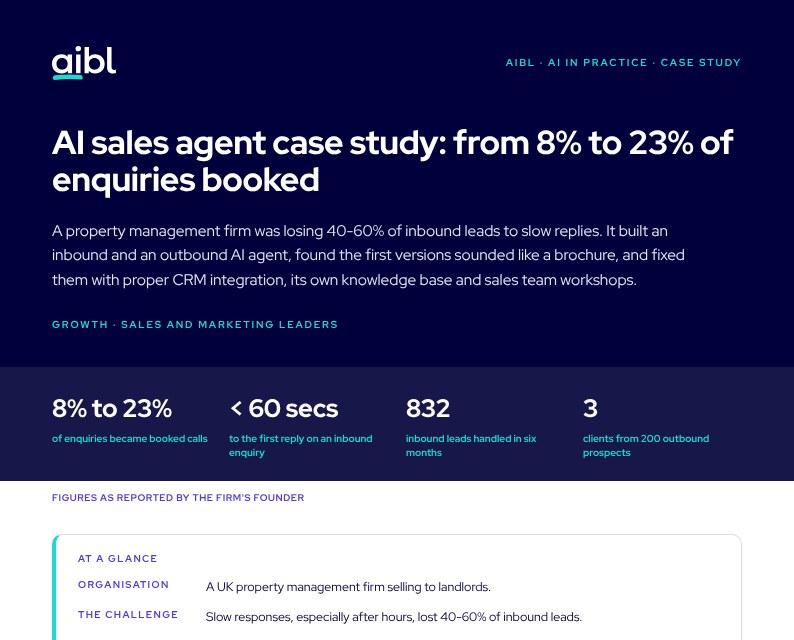
A property management firm was losing 40-60% of inbound leads because it replied too slowly, especially after hours. It built two AI sales agents: one answers enquiries in under 60 seconds with a single qualifying question, the other researches prospects and sends outbound sequences.
The first versions sounded like a brochure. Results came after two weeks of CRM work, company-specific knowledge and workshops with the sales team. Booked calls rose from 8% to 23% of enquiries.
Figures as reported by the firm’s founder
It answered everything at once. A landlord asked about fees for one flat and got a paragraph on compliance dashboards and lease renewals. The engineers thought that was clever. Prospects found it robotic, and the outbound emails read like marketing copy.
It spent two weeks connecting the CRM properly, fed the agents the team’s own service descriptions and FAQs, and paced the inbound flow: one qualifying question, a follow-up, then a booking link. A weekly review checks accuracy, because property management is regulated.
In high-intent, short-cycle sales with a lot of leads, where replying a day late loses the deal. It suits local services and transactional B2B. It does not suit long enterprise cycles, low lead volumes or deals needing heavy bespoke scoping.
If slow replies are costing you deals, the full case study shows how this firm built, broke and fixed its agents:
This case study first appeared in aiblBRIEF. Read the original article: What sales automation looks like when it really works.