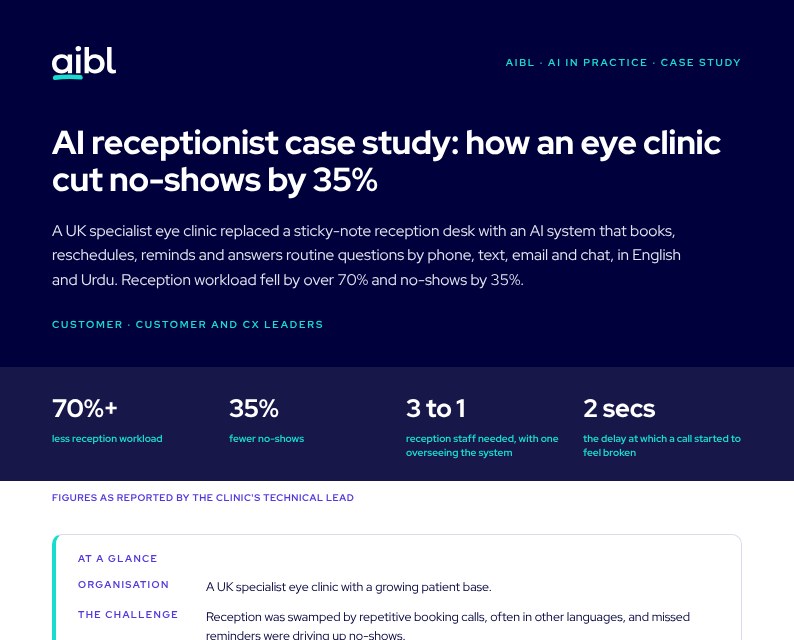
A UK specialist eye clinic automated the first layer of patient contact: bookings, rescheduling, reminders and routine questions, across voice, SMS, email and web chat, in English and Urdu. Reception workload fell by over 70% and no-shows by 35%.
Anything messy still goes to a person. Complaints, edge cases and anything needing judgement stay with staff.
Figures as reported by the clinic’s technical lead
It sorts every contact into three routes: reschedule, ask about services, or book. It checks the calendar in real time, offers slots and confirms. Returning patients are recognised, and new patients register before booking. Anything outside the three routes goes to a person.
With consistent reminders and easy rescheduling. Patients get a message two days before and again the day before, by SMS and email, and can move an appointment without getting through on the phone. High-priority follow-ups can trigger an outbound call.
Language quality and speed. Native speakers had to test terminology, tone and formality, because direct translation fell over. Response delays above about two seconds made calls feel broken, so the team upgraded models and tuned the workflow.
If routine calls are swamping your front desk, the full case study shows how this clinic built and rolled out its system:
This case study first appeared in aiblBRIEF. Read the original article: Automating the first layer of customer contact.