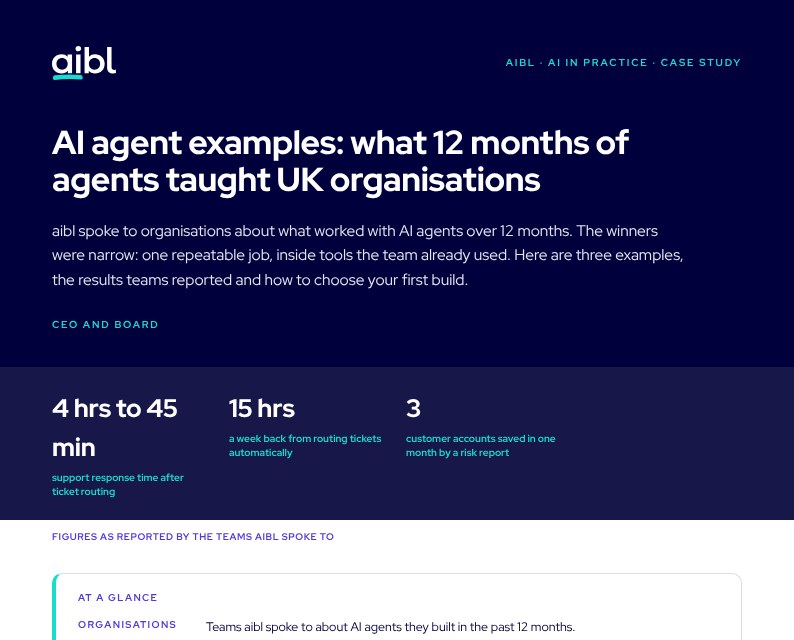
The AI agents that worked for organisations aibl spoke to over the past 12 months were narrow. They did one boring, repeatable job inside tools the team already used. The ones that failed tried to think before they could do, and needed more supervision than the work they replaced.
Three examples stood out: support ticket routing, meeting notes into tasks, and weekly churn risk reports.
Figures as reported by the teams aibl spoke to
Agents that ran one repeatable job. A ticket router that reads, categorises and posts each ticket to the right Slack channel. An agent that turns meeting transcripts into tasks. And a weekly report that scores churn risk from CRM, usage and support data.
Because they plug into Slack, the CRM or the project tool people already use, so teams see results in days and can adjust quickly. Every owner could say what their agent did in one sentence. Generic assistants that promised everything kept breaking.
Pick one task inside a tool you already use and keep the scope to one sentence. Favour fast iteration over sophistication. If you buy rather than build, ask vendors to show agents working inside your existing tools.
If you are deciding which agent to build first, the full case study sets out what worked across the teams aibl spoke to:
This case study first appeared in aiblBRIEF. Read the original article: What 12 months of AI agents taught organisations.