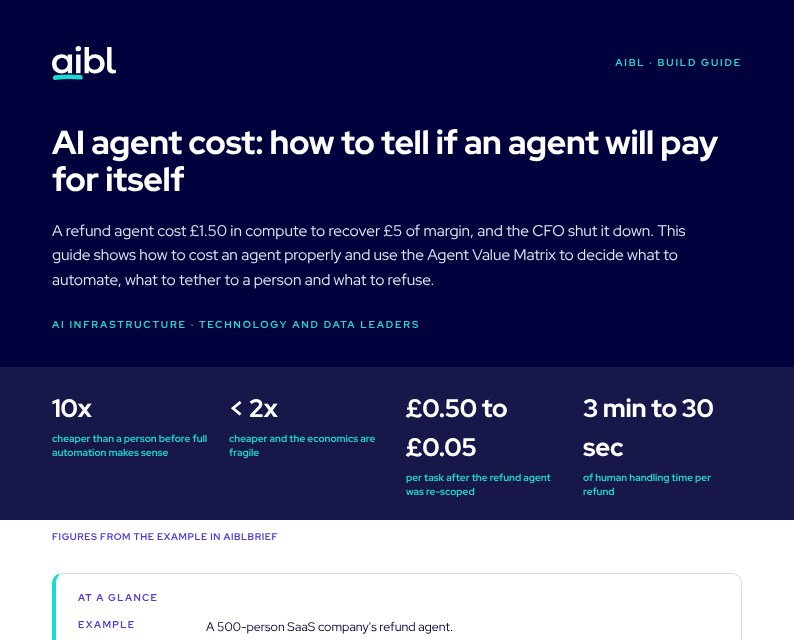
A 500-person SaaS company built a refund agent that looked great in the demo. Then the CFO saw the bill: about £1.50 in compute to recover roughly £5 of margin, and around one reply in ten misread the policy. The project was shut down.
Agents behave less like software subscriptions and more like digital workers. The Agent Value Matrix asks two questions before anything is built: how much cheaper is the agent than a person, and what breaks if it fails?
Figures from the example in aiblBRIEF
Because demo costs do not survive production. A task that cost £0.05 in testing can reach £0.50 once edge cases, traffic, retries and safety checks arrive. Costs also leak through bloated prompts and expensive models used for trivial steps that nobody audits.
Compare the cost per task for a person (salary, benefits and overhead divided by annual volume) with the agent’s cost, including API calls, lookups, retries, error correction and a 20% buffer. Then rate the risk if it fails.
It moved from Zone 4 to Zone 2. Instead of deciding and issuing refunds, the agent now retrieves data and drafts a reply, and a person sends it. Cost fell from £0.50 to £0.05 a task and handling time from three minutes to thirty seconds.
If you are deciding which agents to fund, the full guide gives you the method:
This guide first appeared in aiblBRIEF. Read the original article: Why your agent costs more than you think (and how to fix it).