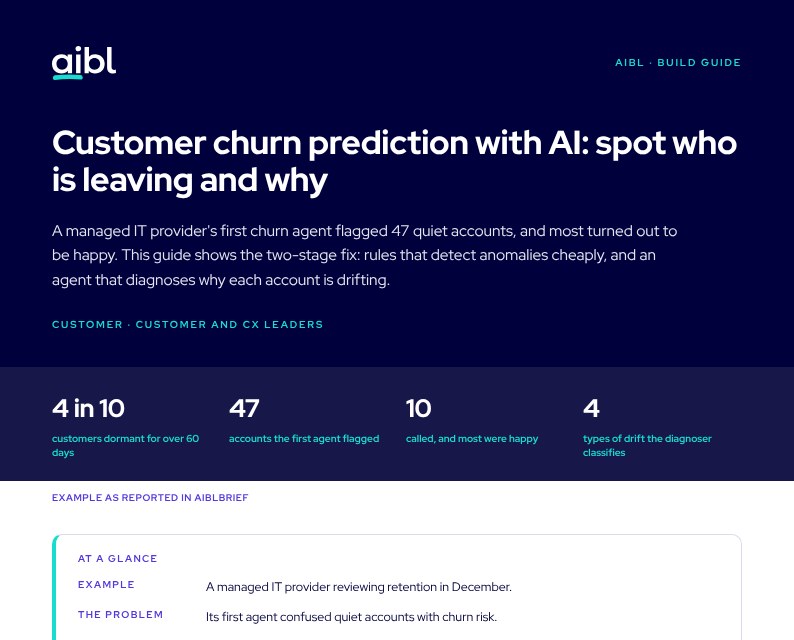
A managed IT provider found nearly four in ten of its customers had shown no meaningful engagement for over 60 days. Its first agent flagged 47 quiet accounts as at risk. The head of customer success called ten of them, and most were perfectly happy.
Quiet often means things are working. The Churn Hunter separates detection from diagnosis: cheap rules flag anomalies, and an agent works out why each one happened.
Example as reported in aiblBRIEF
It treated low usage as churn risk. In managed services, quiet periods are normal when things are working. The team needed to know why an account had gone quiet, not just that it had.
A daily rules check flags any account where usage has fallen more than 50% against its 90-day average, there has been no ticket or meaningful request in 60 days, a data provider shows a merger or leadership change, or the contract ends within 90 days.
It reads a context brief for each flagged account and classifies the drift: value gap (the job is done), economic gap (budget pressure), relationship gap (the champion left) or fit gap (their stack is changing). It returns a risk score, the reasoning and a recommended next step.
If you cannot tell which quiet customers are leaving, the full guide gives you the system:
This guide first appeared in aiblBRIEF. Read the original article: The Churn Hunter: spotting customers who are leaving before they ghost.