
B2B lead generation in the UK: a guide for AI vendors
B2B lead generation for an AI vendor selling into UK organisations is not about the number of contacts you...
Read more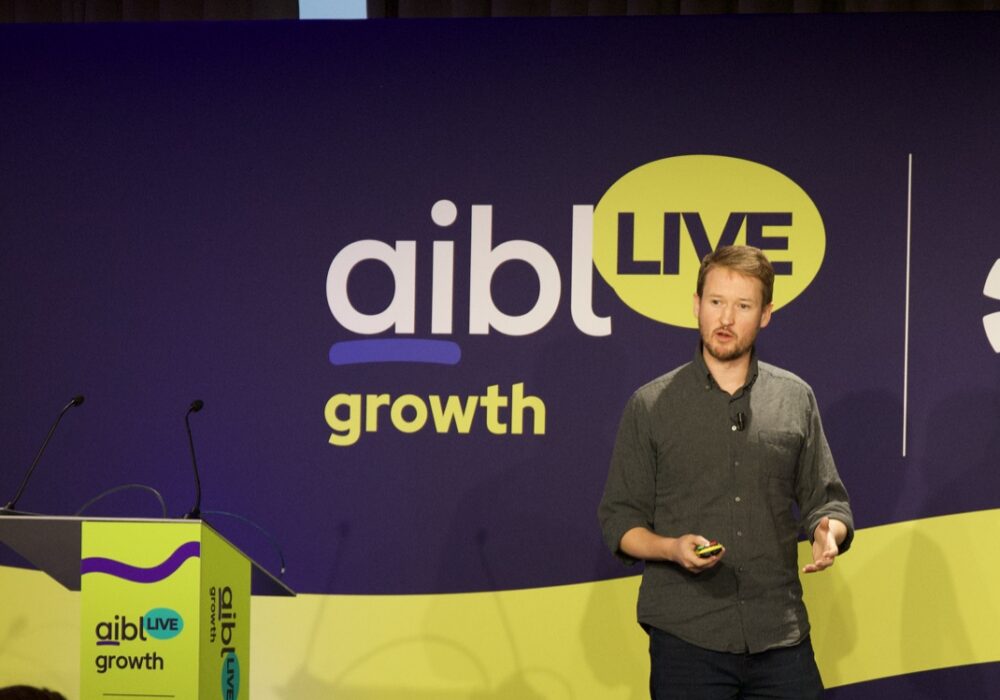
Nomad Foods, the company behind Birds Eye, iglo, and Findus, is Europe’s biggest frozen food manufacturer. As its head of insight and portfolio strategy, Joe Clark works out which products people want to buy so the company can make them. Doing that well means understanding how many people might want a product and why.
Speaking at aiblLIVE, Clark said insight teams plot research on two scales. One runs from “we think someone has a cat” to “I know all of your darkest secrets”, and the other from everyone on the planet to “one person from Basingstoke”. Ideally, a researcher would know everything about everyone. The CFO, Clark joked, would rather they knew very little about very few people, because the ideal is expensive and slow.
That tension came to the fore when Nomad was asked to create the positioning for a new pizza brand across Europe in six weeks. Work like that can take from six months to two years. But twice a year, Nomad pitches new products to retailers such as Tesco, and the brief had to fit that timetable.
Under that kind of pressure, the insights team often skips stages of research it would like to do. “Now we can fill those with synthetic audiences,” Clark said. These are groups of AI-generated respondents, 30 to 40 in each project, that the team questions much as it would a qualitative group. With no moderator in the middle, Clark thinks the discussion guide matters even more than usual.
Symbionic, an agency, builds Nomad’s audiences on its own platform. “We’re a food company, we’re not a tech company,” Clark said. For Nomad, building its own AI tools would be “a real red herring”, spending resources on “something that’s not consumer-facing and making you money”. Building an audience takes work, but once it exists the team doesn’t need to keep building new ones. Asked what prompted Nomad to use synthetic audiences, Clark said, “Cost and time, basically.”
Pizza made a useful test. Nomad already had a large body of research from its Goodfella’s brand in the UK and from work across Europe, and knew why people bought pizza and when they ate it. The team asked synthetic respondents how and when they ate pizza, then showed them positioning ideas, packaging, and communications. In the pilots, the audiences drew on social media and other online sources. The team fed none of its own research in, so it could see whether simulated consumers would describe the same picture as real ones. Clark’s verdict was “yeah, sort of.”
Follow-up questions got easier. After talking to a group of consumers, a researcher often thinks of one later and can’t always get back to the person who made the original remark. With synthetic respondents, the team could return to the same people over several rounds to find out what they meant.
Clark said the cost per project halved once the audience was built, and that reporting was three times faster than for a conventional qualitative group. The research itself was relatively quick, he said. Much of the time went into agreeing what the business wanted to find out, and then what the results meant.
The downside, as Clark put it, is that “you end up with a robot trying to be a human”. Earlier in his career, working with a dishwasher brand, Clark watched thousands of people load their dishwashers at home. One man, in Germany as Clark recalls, left the room and came back with his toilet brush, which went in with the dishes. Asked why, he said, “Well, it’s the easiest way to clean it.” He was adamant, and thought it was strange that other people didn’t do the same. The client didn’t launch a product on the back of it. But for Clark, “it’s the sort of insight you’re not going to get from a synthetic consumer.”
Shown some of the pizza packaging, one synthetic respondent said, “The design shifts attention towards the consumption occasion.” Clark said the team could take the intent of a comment like that. But put the quote in front of an investor and “they’re gonna think you’re a lunatic because no one has ever said that in the history of the world.”
The respondents were also “incredibly polite”. In a real focus group, most people are courteous, but there is usually at least one person happy to say they don’t like the product, the advertising, or the company. Clark wants that kind of comment, such as “That looks like a 3-year-old has drawn it,” and the team deliberately steers groups towards it. He suggested the synthetic respondents would find something nice to say even about a fake design.
His view is that synthetic respondents give a broad picture of what a lot of people will say, but settle on the average and miss the outliers, which he sees as crucial in research. Chunky fish fingers, one of the best products Nomad has launched in the past 10 years, “don’t actually make any sense on paper”, Clark said, because “no one said to us at any point, ‘I want a chunkier fish finger.’ That’s just not a thing that anyone did.” The team made new formats and tried them out with people, who said, “Oh, actually these are really nice.” They are now among Nomad’s best sellers.
Nomad doesn’t treat synthetic research as a final stage. Real consumers validate a proposition before it’s finished, and the team still runs qualitative groups and ethnography. Asked whether the work had produced something that reached market, Clark described a proposition that had yet to launch.
Nomad’s next step is to feed its own research into the audiences, building what Clark called “almost a brain” for each synthetic respondent. That will take time. Even once the audiences are built, they’ll need new first-party data to stay current, which is why Clark doesn’t expect traditional research to disappear.
Nomad draws its firmest line over evidence used externally. Much of its quantitative research goes to investors and retailers, and Clark said he couldn’t justify presenting synthetic responses as though they came from real consumers. Telling Tesco that 2,000 consumers loved a product, when the respondents were synthetic, would be dodgy ground.
B2B lead generation for an AI vendor selling into UK organisations is not about the number of contacts you...
Read more
Nomad Foods, the company behind Birds Eye, iglo, and Findus, is Europe's biggest frozen food manufacturer. As its...
Read more
Implementing AI isn't something we fully understand. We're too early in the lifecycle. It's like raising a...
Read moreGet ahead with the most actionable insights, playbooks and real-world AI use cases you can adopt right now, in your inbox every week