
B2B lead generation in the UK: a guide for AI vendors
B2B lead generation for an AI vendor selling into UK organisations is not about the number of contacts you...
Read moreB2B lead generation for an AI vendor selling into UK organisations is not about the number of contacts you collect. It is about being known and trusted by the senior people who will sign off AI spend before they draw up a shortlist. Most of that shortlist now forms early, often with an AI assistant’s help.
This guide is for marketing and sales leaders at AI vendors and enablement partners planning their UK pipeline for 2027. It covers why lead generation works differently when the buyer is a business leader rather than a technical team. It compares the main channels, sets out how to judge a lead generation company before you sign, and shows how to measure what you get back.
B2B lead generation is the work of finding organisations that could buy from you and starting a conversation with the people who decide. For an AI vendor selling to UK business leaders, a lead is not a downloaded PDF. It is a named senior person, in an organisation that fits, who has a live AI problem you can help with.
That definition rules out a lot of what is sold as lead generation. A list of email addresses is data, not leads. A webinar registration from a junior analyst may be useful later, but it is not a buying conversation. The people who approve AI spend in UK organisations are chief executives, finance and operations leaders, and heads of HR, sales and customer teams, as well as technology leaders.
So the useful question for any channel is narrow. Does it put you in front of the right role, at the right kind of organisation, at a moment when they are open to hearing from a supplier? Volume only matters once the answer is yes.
It works differently because buyers decide earlier and research on their own, increasingly through AI tools. By the time a buyer fills in a form or issues an RFP, most of the shortlist is already set. Lead generation has to build trust before that moment, not chase it afterwards.
The evidence points the same way from several directions. 6sense found that buyers fill four of their five shortlist places on the first day of research, and buy from one of those four 95% of the time. In Forrester’s 2026 survey of nearly 18,000 business buyers, twice as many named generative AI or conversational search as their most useful source as named any other. We cover both studies in our piece on how AI is reshaping B2B buyer research.
Trust decides who makes that early list. In the 2026 AI Enablement Services Buyer Survey of 100 senior UK buyers, run by 10x Humans (which backs aibl), 57% found vendors through existing relationships. 86% named domain expertise as the deciding factor, and only 11% said price was decisive. Our guide to getting known before the RFP goes further into what that means.
The channels that reach senior UK business leaders are the ones they already trust. That means peer events and roundtables, independent research, newsletters they chose to read, curated directories and targeted account work. Cold outbound and bought lists still have a place, but they work best once a buyer already knows your name.
Each channel does a different job:
Most vendors that build steady pipeline combine one or two trust-building channels with targeted follow-up, rather than spreading budget across all of them.
Choose a lead generation company by asking for evidence of its audience, not a promise of lead numbers. The useful provider can show who it reaches by role, seniority and organisation size, explain how it reached them, and say plainly what it will and will not commit to.
Put these questions to any provider, whether it is an agency, a publisher or an event organiser:
Be wary of guaranteed lead volumes with a vague definition of a lead. A provider that promises hundreds of leads at a fixed price is usually selling contacts, and contacts are not the same as buyers. The better providers commit to what they control, such as the audience and the format, and leave the selling to you.
Measure lead generation by the conversations and pipeline it creates with the right buyers, not by the number of contacts. The best early measures are meetings held with target roles, the share of a buying group you have met, and opportunities that reach a proposal within two or three quarters.
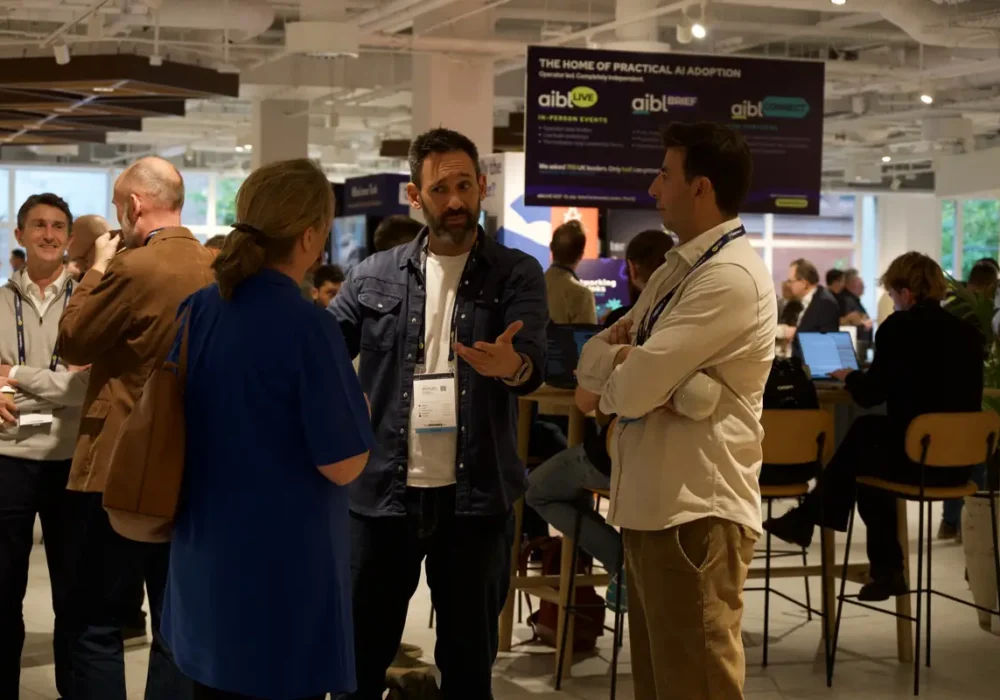
AI decisions in UK organisations rarely sit with one person. Finance, operations and HR often have a say alongside technology. So a channel that puts you in front of two or three members of the same buying group may be worth more than one that delivers ten unconnected names. At aiblLIVE 2026, 39% of attendees from organisations with 500+ staff came with a colleague, which is one reason vendors value group formats.
Fit matters as much as volume. In aibl’s State of UK AI Adoption Survey 2026 (755 UK mid-market business leaders surveyed), very fast-growing firms reported measurable AI ROI at 81.6%, against 21.3% for slow-growing ones. That is an association: fast growers are also likely to invest and measure more. Our piece on best-fit AI buyers sets out how to use that when you build a target list.
aibl is a media and events company for UK business leaders adopting AI. AI vendors and enablement partners use it to meet senior buyers who own AI decisions, through events, the AI Enablement Directory and year-round content. It suits vendors whose buyers are business leaders, not developers.
The audience is built all year. aiblBRIEF, the weekly newsletter, goes to 6,000+ subscribers, and aibl has more than 10,600 LinkedIn followers. In 2026, 900+ leaders attended aiblLIVE, the annual event aibl runs. 75% were director level or above, 43% were in the C-suite, and half were evaluating AI vendors now or within the next 12 months. aiblLIVE 2027 runs on 13 July 2027 at InterContinental London, The O2.
For consultancies, implementers and trainers, the AI Enablement Directory is free to join for firms that pass a hand review. What aibl does not promise is lead volumes or pipeline value. It commits to the audience, the formats and the one-to-one meetings it sells. The rest depends on your product and your follow-up. One AI training partner’s founder told us: “We generated 50 active prospects from the event.”
Lead generation captures interest that already exists: it finds buyers and starts conversations. Demand generation creates interest in the first place, by teaching a market about a problem and your way of solving it. AI vendors usually need both. Demand generation shapes the shortlist, and lead generation turns a place on it into meetings.
Rarely on their own. A list tells you who exists, not who is open to a conversation, and senior buyers ignore most cold approaches from names they do not know. Lists are more useful as a targeting tool. Use them to decide which accounts to focus on, then reach those people through channels they already trust.
Expect months rather than weeks. Senior buyers often take more than one quarter to move from first conversation to proposal, and several people usually have a say. Trust-building channels such as events, research and newsletters pay back over two or three quarters. Outbound can produce meetings sooner, but they convert less often.
Most do both. Keep targeting, messaging and follow-up in-house, because they depend on knowing your product and your best customers. Use outside providers for what you cannot build quickly, such as a trusted senior audience, an event room or independent research. Judge every provider on its audience, not its lead count.
Book a call with our partnerships team about reaching UK business leaders in 2027
B2B lead generation for an AI vendor selling into UK organisations is not about the number of contacts you...
Read more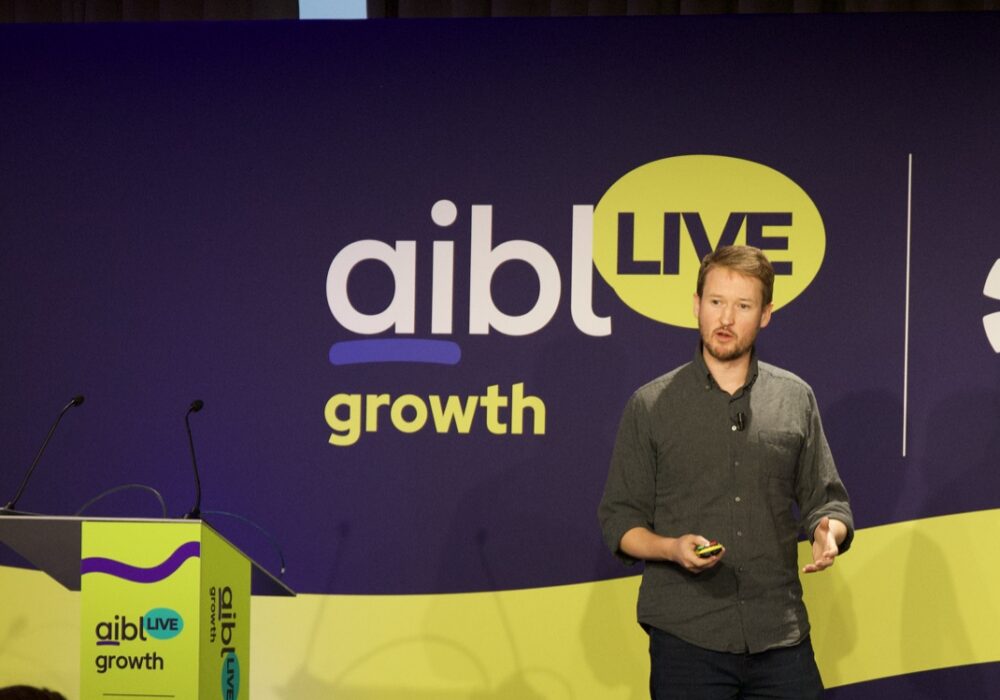
Nomad Foods, the company behind Birds Eye, iglo, and Findus, is Europe's biggest frozen food manufacturer. As its...
Read more
Implementing AI isn't something we fully understand. We're too early in the lifecycle. It's like raising a...
Read moreGet ahead with the most actionable insights, playbooks and real-world AI use cases you can adopt right now, in your inbox every week