
The Company Brain: Moving from Knowledge to Wisdom with Mark Riley, Matheson AI
Mark Riley, founder and CEO of Matheson AI, argues your AI capability is not a moat. Your accumulated decisions are...
Watch video
There’s so much AI news that it’s easy enough to miss the steady improvements and even the leaps forward.
Claude Code was the meteor that hit business in early 2026, but that’s not all that’s happened. I’ll just touch on a few before we look to the near future.
Prices dropped by half. This is the average of course, and you may be paying top prices for familiar flagship GPTs, but every AI company is under pressure. The key is that open models are now shipping virtually in lock-step with the name brands. The focus on tokenisation costs is forcing the vendors to make their models more efficient and affordable.
The strongest models can work on their own for half a day at an 80% success rate. More than that and the reliability starts to plummet, but 80% is about what you’d expect from a human worker in many use cases. Half a day of unsupervised, useful work is a meaningful unit that could mean an entire project, from a data reconciliation to a thorough document review or competitive analysis. Is there a human in the loop? Hopefully yes, because in most cases that’s going to produce your best result, but that human isn’t replicating what the AI did, they’re validating, learning from, and improving on it.
It’s all about governance. This one is a bit self-serving since aibl’s research was ahead of the market on this one, but the point still stands. Agent sprawl afflicts most companies and it’s why so many AI projects are getting cancelled or re-evaluated. The businesses that aren’t staring at a spaghetti platter of agent projects are the ones that approached their build outs with a mature governance strategy. But that’s only about 1 in 5 of mid-market companies in the UK.
Now the fun bit. Based on my reading of releases, we’re going to see equally profound changes in the next six to twelve months.
Agents will pass the point of being able to do a full day’s unsupervised work at that same 80% reliability level. It’s not quite as predictable as the early years of Moore’s Law, but we’re likely to get a doubling or more every six months.
Costs will halve again. The same economics forces apply, and while high end models for specific tasks will still command top dollar, competition from follower models and the growing awareness of token use will drive the per token price of mainstream activities down.
The UK’s mid-market is likely to be hit by an AI-driven cyber incident. Agentic ransomware or another exploit is cheap and ultimately scalable. Mid-market firms are under-defended compared to the enterprise, but just as data-dependent. Insurance costs and board views will have to adapt.
A model or service from a major AI supplier that your company uses will be shut down with less than a year’s notice. I think that the pace of releases coupled with financial pressures to produce tangible profits, or at least rising revenue, will mean that the Sora example is just the first of many. Fortunately, as we always say at aibl, your success is never about the model.
Richard
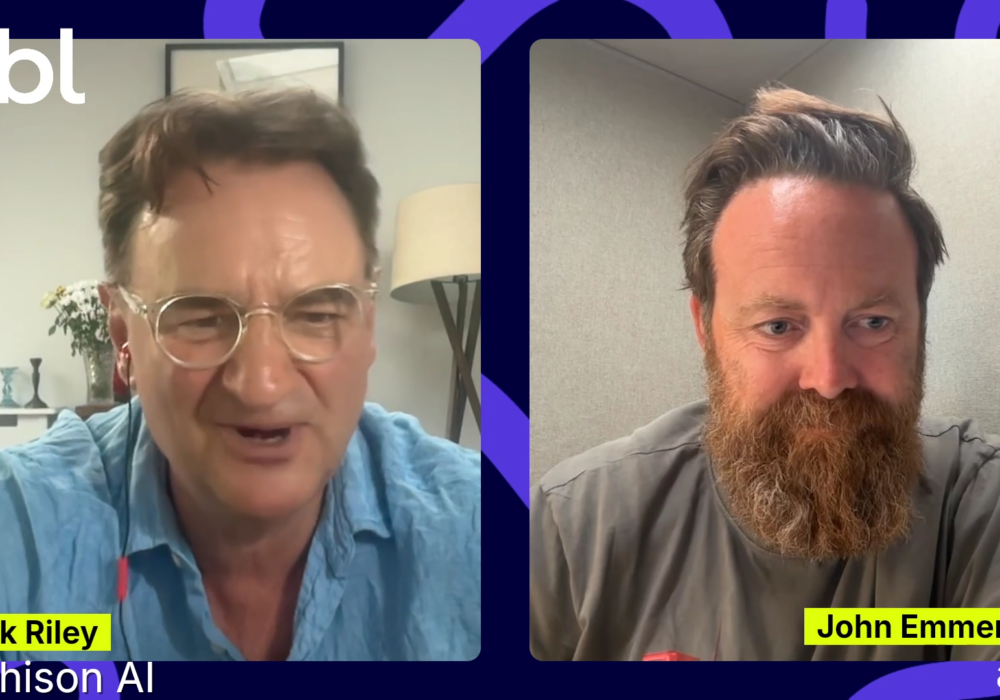
Mark Riley, founder and CEO of Matheson AI, argues your AI capability is not a moat. Your accumulated decisions are...
Watch video
Mark Riley runs Mathison AI, a boutique AI advisory in Bristol that started out advising media companies and now...
Read more
There's so much AI news that it's easy enough to miss the steady improvements and even the leaps...
Read moreGet ahead with the most actionable insights, playbooks and real-world AI use cases you can adopt right now, in your inbox every week