

The Shadow Workforce: Managing the AI Your Employees Are Already Using with Alison Wright, Microsoft UK
Ali Wright, SMB Director at Microsoft UK on how AI is moving faster than most leaders realise…
Watch videoLast week’s workforceLIVE roundtables surfaced some of the most candid thinking we’ve heard from mid-market leaders on AI and the workplace. Sessions ran under Chatham House Rule, so observations are anonymised.
The ‘frozen middle’ is a familiar phenomenon: it’s the layer that stalls progress, caught between executive ambition and operational reality. See aibl’s research on AI in UK HR and people functions for the research behind this.
Middle managers’ influence has rested on two things: control of information and administrative coordination. AI is dismantling both. It opens up information that used to flow through them and automates the coordination work that justified their role. At the same time, organisations are flattening structures. They’re testing how far they can cut the middle layer without breaking the business.
What’s left is being pushed down to junior staff: the creative work, critical thinking, and strategic judgment. For managers whose identity is tied to that hierarchy, it reads less as empowerment than as a threat.
This is removing what organisations will need most as AI becomes more autonomous: the foreman-level knowledge senior leaders rarely have. Where processes break down, which exceptions matter, how the work really gets done. Through this lens, the layer best placed to govern AI is also the slowest to adopt it.
Entry-level roles are where professional judgment develops. You do the foundational work, make mistakes cheaply, and build the instincts that underpin harder decisions later. But businesses often regard these roles as cheap labour rather than future talent, so they’re the first target for automation. The next generation of foremen isn’t being built.
And the leaders who would normally guide junior staff are increasingly stretched. The corporate theory is that automating administrative work frees managers to lead their people. In practice, the time AI returns gets filled with more of the same: more reports, more emails, more operational tasks, just done faster.
Junior staff look up and find nobody there.
The anxiety isn’t only about redundancy. It’s about having no clear path through.
One attendee proposed redesigning junior roles around human-in-the-loop oversight of AI outputs, checking and correcting rather than generating. Others had gone further. They deployed junior staff as reverse mentors, pairing them with senior leaders on AI application precisely because they adopt faster. Some had created dedicated teams of younger employees to develop AI-driven processes from the ground up.
AI ambassador programmes have emerged in some organisations as a more effective route to building fluency than top-down policy. Team representatives share tips in Slack and run peer learning sessions. Whether any of this builds the same judgment as doing the underlying work yourself remains an open question.
Most organisations have bolted Copilot onto existing Office licences: it’s already installed, governance is straightforward, it avoids procurement. But it doesn’t reflect what staff need, so they use ChatGPT anyway, officially or not.
Restricting access doesn’t stop adoption, it pushes it underground.
A bank described hard digital guardrails, certain tools simply blocked, which creates resentment and workarounds. Others rely on trust-based policy: tools approved for work use, personal use untracked. The assumption is psychological safety. It isn’t reliably there. Some run amnesty periods combined with usage audits, on the logic that you can’t govern what you can’t see. None of them closes the data breach risk.
One CTO described letting teams build their own internal agents. The result wasn’t a culture of innovation. It was a maintenance burden, pulling focus from core product work and fragmenting knowledge across the organisation.
New tools will keep arriving, some of them better than what exists now. Organisations still firefighting shadow usage and fragmented agents when that happens won’t be in a position to use them.
HR is being asked to lead the cultural response to AI adoption. It’s managing junior staff anxiety, supporting overloaded managers, and redesigning roles, without being able to see the reality it’s responding to.
One attendee had launched an internal HR bot for routine queries. It gave a wildly incorrect answer about bereavement leave. The real version of HR policy exists in people’s heads, not in the messy, contradictory PDFs the agent was trained on.
Another described speech-to-text errors killing adoption of meeting transcription tools. Accented speech in particular produces inaccurate records. In HR, a tool misquoting an employee isn’t only embarrassing, it’s a discrimination liability.
Elsewhere, AI note-takers were creating a different problem: Subject Access Requests. Every recorded performance conversation, disciplinary meeting, or redundancy discussion now potentially generates a transcript. When an employee submits a request, all of it has to be found, reviewed, redacted, and disclosed. The redaction workload has become substantial enough that some organisations are outsourcing it entirely. In regulated industries the pressure is acute, and the FCA was cited specifically. The legal requests now landing on HR are, in part, generated by the data HR’s own AI produced.
Across the mid-market, aibl sees this consistently. HR carries the cultural change message while absorbing the consequences of tools it didn’t procure and can’t fully govern.
The department AI was supposed to empower is less empowered than before. It sees less, carries more legal risk, and spends resource managing the consequences of tools it has in some cases stopped using. Nobody in these sessions had a clear route out.
These are practitioners who believe in what they’re doing. For organisations that get the conditions right, AI removes the work people hate. It creates space for the thinking that administrative burden crowds out.
One participant described overseeing a customer support workforce reduction from 15,000 to 3,000 people, a direct consequence of AI deployment. The room moved on quickly.
AI is delivering. But the outcomes differ by layer. Whether adoption feels like augmentation or elimination depends on how much leadership invests in redesigning the work around it.
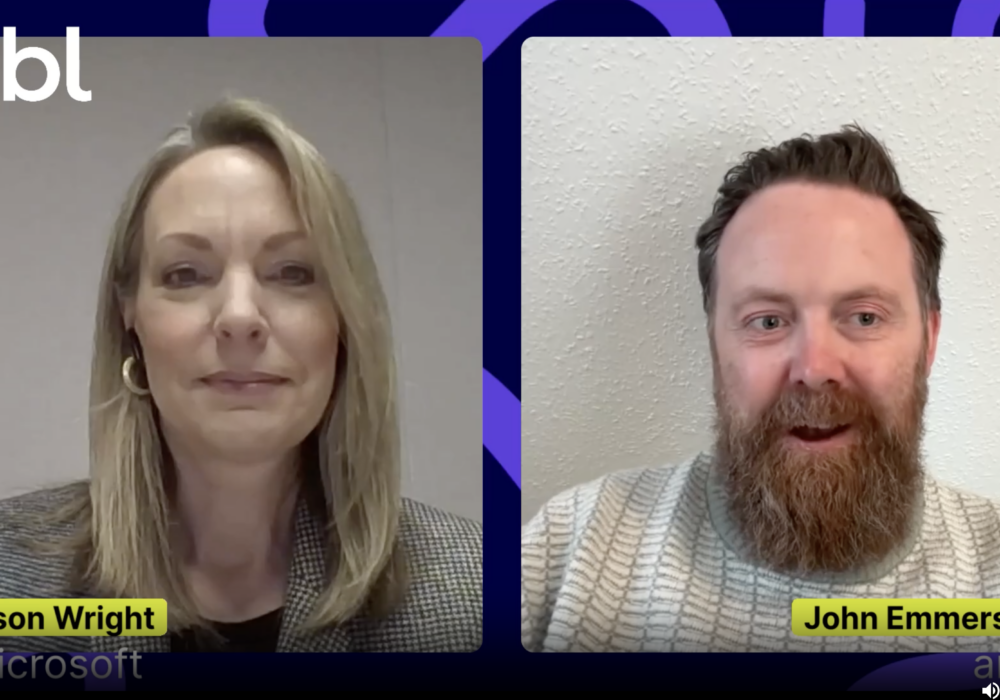
Ali Wright, SMB Director at Microsoft UK on how AI is moving faster than most leaders realise…
Watch video
Ali Wright, SMB Director at Microsoft UK, talks to small and mid-sized business owners across the UK every day -...
Read more
In keeping with our lead article, we went into the data from aibl’s Mid-market AI survey and dug into...
Read moreGet ahead with the most actionable insights, playbooks and real-world AI use cases you can adopt right now, in your inbox every week