
Off the record: AI, operations, tech, and teams
This is the second half of our Off the Record series. These are quotes we agreed not to attribute, from...
Read moreThe hardest parts of mid-market AI adoption are political, not technical, according to candid growthLIVE roundtable discussions held under Chatham House Rule. Leaders described decaying databases nobody wants to own, monitoring tools that break trust, junior staff producing AI-polished work above their competence, shadow AI compounding into internal noise, and automated outreach so voluminous that even the people building it now ignore it.
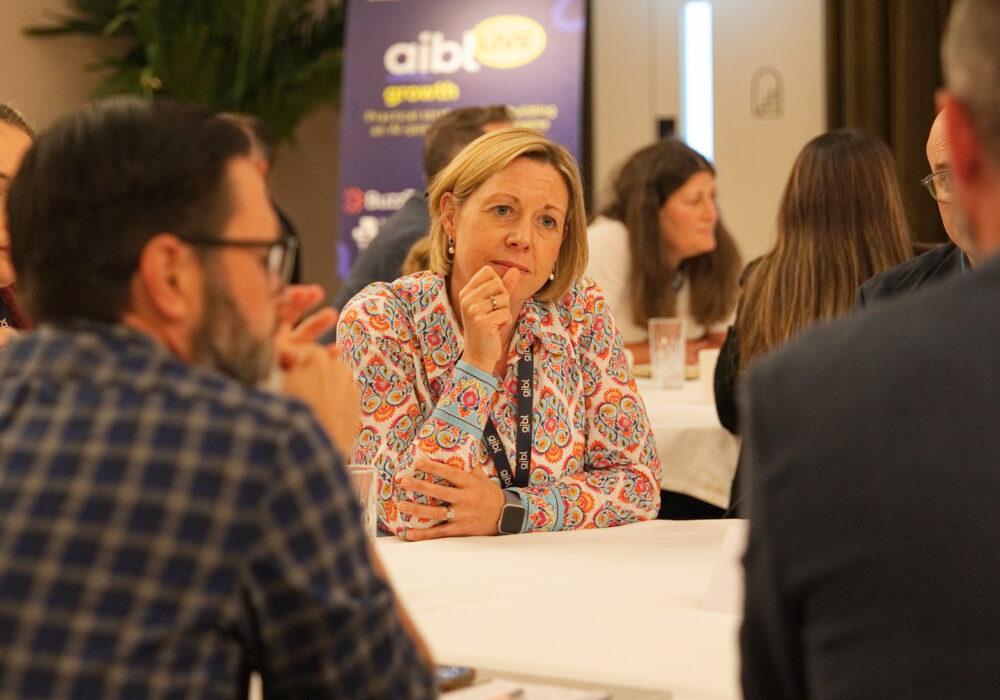
Last week’s growthLIVE roundtables produced some of the most candid thinking we’ve heard from mid-market leaders on AI adoption. Sessions ran under Chatham House Rule, so observations are anonymised.
Across the roundtables, leaders described legacy databases in a state of advanced decay. Marketing teams working from client lists with an 18-month decay rate, resulting in records that are nearly obsolete almost before a campaign launches. One participant cited a database still carrying contacts who would be 130 years old.
Just as damaging is the power structure around the data. Centralised revenue operations teams trying to consolidate data are running into active resistance from departments unwilling to surrender administrative control. Some technical teams have found workarounds, using open-source frameworks like Model Context Protocol to connect isolated systems directly to AI engines without API coding. Board and IT sign-off is still required before anything connects.
One marketing leader described her engineers building repositories and AI workflows freely. Her own team manually re-uploaded PDFs every time something changed on the front end, because they hadn’t been trained on developer tools. She didn’t dress it up: her commercial team were dinosaurs, watching their engineers drive flying cars.
Reps welcomed the tool when it helped them prioritise their own workflows, flagging intent signals and surfacing which deals deserved attention. What they resisted was the pipeline review, where the same data stripped away their ability to manage upwards. One participant described hooking Avoma call recordings into HubSpot and feeding the data through to Claude, scoring deal health automatically. Salespeople love a spin, and the AI removes it.
In a separate session, when an organisation switched on call recording for performance monitoring, staff didn’t raise a formal objection. They told management directly: ‘it’s like you don’t trust us.’
Demonstrating that the tool could draft follow-up emails, surface a prospect’s personal details ahead of a call, or flag a contact’s recent holiday was enough. Once staff saw personal value, adoption followed, though it took nine months.
Several participants brought up synthetic seniority: junior people using AI to produce work that reads as authoritative without the judgement to back it up. One described interviewing what appeared to be a highly experienced candidate, only to discover post-hire that the person ‘has no clue.’
A second leader described junior colleagues submitting AI-generated copy because it reads well, without the baseline to interrogate whether it was accurate or on-brand. When leadership pushed back, they couldn’t defend it. They hadn’t built the logic themselves.
Entry-level roles have traditionally been where professional judgement forms. You do foundational work, make cheap mistakes, build the instincts that underpin harder decisions later. If those tasks are automated before the instincts develop, the next generation of senior practitioners is being built on a hollowed-out base.
As the foundational work gets automated and mechanical execution becomes commoditised, the premium shifts back towards critical thinking and judgement. Psychology, philosophy, the things a prompt can’t replicate.
One VP of Marketing wanted to burn her database down and start over. Her team had been given generative AI tools without guardrails and used them for documentation and briefs. The AI began self-referencing those outputs, and the result, in her words, was ‘an exponential growth in bullshit’ inside their own systems, internal hallucinations compounding until the database was closer to noise than record.
Across the sessions, organisations were dealing with the same problem: shadow AI. Employees reach for whatever tool works, often in parallel, often without oversight, and the outputs land in shared systems.
Where licensed tools are seen as inferior to whatever’s freely available, employees bypass IT governance entirely. One leader solved this by locking the entire organisation into a single approved tool, giving her visibility over every prompt and letting her correct bad behaviour before it compounds. A recently merged business tried the opposite, banning all unapproved tools, only to find the entire workforce using them anyway through workarounds. One CRO took a different route: his technical team had been building internal agents, but their job was building for clients and internal tooling pulled focus from that. They moved to buying off the shelf.
Several executives described the outreach infrastructure they’d built. Automated SDR voice diallers. WhatsApp pre-qualification flows processing thousands of leads a month. One had built internal tooling to automate push notifications, transactional emails, and market commentary at scale.
Asked about incoming automated outreach, the same executives gave the same answer: they ignore all of it. One B2B partner described receiving emails that were relevant, well-scripted, and correctly targeted. He still didn’t engage. The volume had made it meaningless. Customisation used to signal effort. AI has driven that cost to zero. As he put it, the sender has to ‘mean what you’re saying.’
Across the mid-market, aibl sees this consistently: the outbound investment is real, but the return is harder to find. The ones getting traction have stopped treating it as a volume problem. The differentiator is judgement.
More often for political reasons than technical ones. Adoption slows when teams disagree over who owns the data, when monitoring erodes trust, and when tools multiply faster than anyone can govern them. The technology usually works; the organisation around it is what gets stuck.
Usually both, but the data problem is often political. Databases decay fast and ownership is contested, so the block is rarely the technology. It is who controls the data, who is accountable for it, and whether teams trust how it will be used.
No, it tends to work against it. Tracking people to enforce AI use erodes the trust that adoption depends on. People adopt tools when they see personal value in them, which took months here, not when they feel watched into using them.
Standardise on a small set of approved tools with visibility into how they are used, rather than letting every team pick their own. One route that worked here was a single approved platform with prompt visibility, giving the business control without banning AI outright.

This is the second half of our Off the Record series. These are quotes we agreed not to attribute, from...
Read more
aiblLIVE is under two weeks away. I needed to write something for this week that would be useful, but not take up...
Read more
Andy Lambert co-founded ContentCal, sold it to Adobe, and spent four years there as it became part of Adobe Express. He saw teams split between...
Watch videoGet ahead with the most actionable insights, playbooks and real-world AI use cases you can adopt right now, in your inbox every week