PLUS: A hunt to identify the unspoken barriers to AI adoption and lifting repeat purchase rates in this week’s playbook.
From the aibl team
When we dig into real world AI deployments to build our playbooks, we see a trend familiar to anyone who participated in the digital transformation boom of the late 2010s. Many of the tallest barriers are human, not technological.
That’s not to say that budgets, tech stacks and data aren’t challenging, but those are known and quantifiable issues. Everyone’s talking about the technical rails of AI, but the real story is the stalled pilots, the failed rollouts and the quiet hesitation inside teams.
For AiBL Lab’s next research project, we’re interested in the hidden barriers to AI adoption; the cultural questions of emotion, communication and politics that stymied countless digital transformation projects back in the day, and stand in the way of AI today.
Companies rarely talk publicly about their internal frictions, so some of the most important obstacles to AI success stay invisible. We want to change that.
We’re looking for people who’ve lived this from the inside: operators, managers, data leaders, PMs, HR leaders and anyone else who’s wrestled with rollout dynamics. If your team has quietly struggled with adoption, you’re not alone, and your perspective can help the entire field.
Tell us your stories, whether they’re good, bad, or weird. Write me at richard@aiblmedia.com to book a short interview with our researchers.
Playbook of the week
The 4-step automated workflow a skincare brand used to fill post-sale silence and lift its 26% repeat-purchase rate.
Most growing brands put huge effort into getting a customer to buy, then almost no effort into what happens next.
The sale completes, the confirmation email lands, and the business goes quiet beyond a standard, undifferentiated email cadence. What starts strong weakens into soft retention.
A skincare brand saw this pattern clearly. Acquisition was strong, but repeat purchases sat at 26 percent over six months. As the founder said, “We spend so much to win them, then we vanish.”
Their breakthrough wasn’t a loyalty relaunch or heavier discounting. It came from redesigning the first few weeks after purchase and letting a handful of small agentic workflows take care of the moments the team didn’t have time to cover.
Before we get to this week’s news, a reminder that AiBL Live London ‘26 is launching soon, and we want your stories. We want to hear about your massive wins and learn from the things didn’t go according to plan. We’ve all been there.
Maybe you have a case study that is ready for the spotlight?
Whatever your story, I can’t wait to hear it. Drop a line to John@AiBLmedia.com
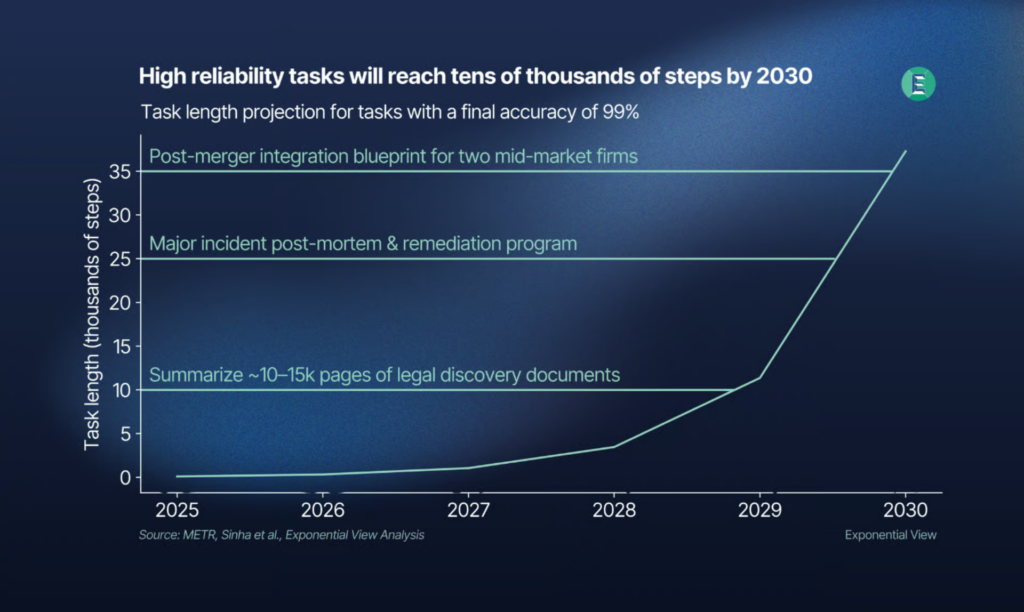
When can the ‘human in the loop’ step away? AI reliability is all about how long the technology can keep an idea in its head and take successive actions. For now, we use strings of agents to keep the concepts small and manageable, with humans checking in and contributing where necessary. AI reliability has been rising predictably, but most tests are based on benchmarks (like achieving a 50% success rate) that are meaningless to a business. The standard has to be at or above our expectations for ourselves. This work from Exponential View sets the bar at 99% and suggests that over the next four years AI will be able to perform 10,000 tasks at greater than human reliability and hockey stick from there. It’s not too early to start thinking about what your business looks like in that context.
Digital skills gap stalls AI progress for UK industrial firmsNew research finds that almost half of UK industrial midmarket firms report a lack of digital skills as a key factor holding back their business growth. The survey results indicate specific shortages in artificial intelligence (AI) literacy, cybersecurity, and data analysis, with mounting evidence that many companies are struggling to implement effective digital transformation strategies.
Platform rollout shows how tech is responding to mid-market realitiesGenerally we stay away from product news, but the launch of Avanade’s new agentic platform for midmarket organisations is telling. The features set seems to be a clear response to market feedback, with an emphasis on reducing the complexity and time-to-value of agentic deployment. For example, a library of ready-to-use agents might belie the potential of bespoke AI, but attempts to provide real value without asking mid-market companies to devote time and training to cross the digital skills gap.
PRODUCT SPOTLIGHT OF THE WEEK
Highlighting Salesforce might sound a bit like suggesting a burger at a burger joint, but we got a peak into the Einstein GPT feature set this week and it’s worth knowing about. It helps across the lead funnel as you’d expect, but the secret sauce is your existing customer data, already in place and structured. It’s in a position to analyse everything from historical data to conversation transcripts, and use that to prioritise leads, predict deal outcomes and customise content down to the individual level. Caveat for the mid-market: Einstein AI features are only bundled into the Enterprise sub.
Quote of the week
“I can build an app in four hours that would have taken me six months to do before. So there’s a lot of junk being built very, very quickly, and only a part of that will come through..”