
The Shadow Workforce: Managing the AI Your Employees Are Already Using with Alison Wright, Microsoft UK
Ali Wright, SMB Director at Microsoft UK on how AI is moving faster than most leaders realise…
Watch video
PLUS: The hidden costs of agentic AI and how governance fixes them
Over the break I had a chance for a virtual sit down with Stefan Tornquist to talk about trends for 2026. Stefan is an ex-Econsultancy colleague and our research partner at Executive Summary RSI.
The midmarket isn’t typically interested in trends that look out too far or too high to be practical in the near term. So, after some reining in, we focused on a macro trend that will increasingly affect every company in the midmarket; as AI improves in its ability to write code, software development shifts from scarcity to abundance.
As an experienced cynic about innovation and promised speed, you may contest the premise and that’s fair enough. But have a read of how Boris Cherny, who led the creation of Claude Code, sets up and uses the system, and you’ll get the picture. In essence, one senior dev can build a team of independent or parallel iterations of their top end model of choice, churning out, testing and debugging code.
Until now, our development needs have always far outpaced our capacity to build. That’s meant that an enormous amount of thinking, planning and architecting had to go into every step. We never wanted to waste a precious resource or make a misstep that would cost real time and money. What would it mean if a misstep meant a day of reworking or a week of completely replacing?
We’ve called data the ‘new oil’ for twenty years now, and like oil, data isn’t worth anything without extraction, refinement, distribution and application…that’s software in the analogy. The bottleneck to any company’s digital transformation, innovation and growth is less the lack of data than the software to use it.
When I’ve broached this topic with other business leaders, they immediately get a gleam in their eye about the prospect of ending the forever ‘buy vs. build’ debate. In the medium to long term that’s probably true, but I doubt that the first order of business will be to build a replacement CRM. It will take time for contracts, stacks and familiar processes to change.
I expect (and already see) the early shift to be in building lightweight internal tools for specific departments, building a focused application instead of purchasing a bolt-on or point solution.
In the last two weeks I’ve seen two examples that bring this to life.
The first is a dynamic commission engine that ingests data from the CRM and accounting systems, and uses natural language to compare against the comp plan, giving every commercial person a real-time dashboard showing the what and why of each payment, with a dispute button to flag the item for an agent (then a human) to investigate.
The second is an invoice checker that examines every inbound PDF invoice, reads the unstructured data and compares it with the original contract or rate card. Not only does it instantly approve 95% of invoices and ship them along for processing, it flags the 5% where something doesn’t line up.
These are ‘boring’ examples of powerful improvements that save time and money. But, they’re something that would have teetered on the line of ‘nice to have’ not long ago. Today, instead of a months-long dev cycle and a price tag with a comma or two, applications like this can be developed by one dev and AI over the course of days or weeks.
We’ll return to this trend, but for now, let me know what your organisation is doing in this vein. richard@aiblmedia.com

A mid-market brand used an agent to generate 500 product descriptions, finishing the first draft in under an hour.
A junior marketing manager was asked to review the copy. By the third description, problems were obvious.
‘Delve into a world of comfort.’
‘Unleash the power of sustainable living.’
What should have been a quick check became a week of manual editing. The manager fixed the same errors on a loop: stripping clichés, tightening tone, and adding back mandatory details.
The agent hadn’t saved work; it had just shifted it to expensive human oversight.
The team believed a prompt could guarantee on-brand content. Managers saw coherent text and assumed the job was done. It failed for two reasons.
NEWS
We’re still collecting stories from the field, what worked, what didn’t, and what surprised you. If you’ve got a case study that belongs on the aiblLIVE stage, get in touch with via John@aiblmedia.com.


This week we’ve been looking at Search Atlas, an SEO platform for mid-market teams fed up with audit tools that only generate a longer to-do list. Its AI agent, OTTO, is built to close the gap between spotting issues and getting fixes live.
Add a pixel to your site and it pushes proposed on-page changes to your dashboard for approval, covering meta tags, schema, canonicals, and internal linking. It’s a practical answer to the SEO backlog that sits untouched because marketing has no spare headcount and dev time is rationed.
For the research behind this, see how UK firms are governing software-as-infrastructure with AI.
Pixel-driven fixes won’t replace proper server-side work, and changes only persist while the pixel stays in place. Keep strategy in-house, and use OTTO to speed up the repetitive on-page changes once you’ve reviewed them. Start with one property, then expand if the impact holds and nothing breaks.
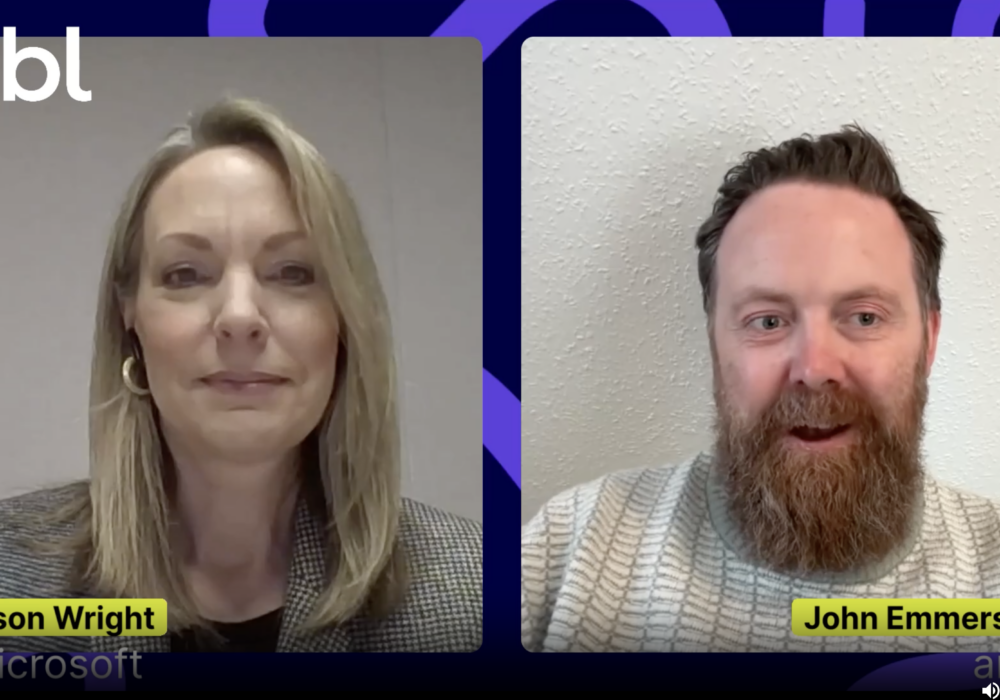
Ali Wright, SMB Director at Microsoft UK on how AI is moving faster than most leaders realise…
Watch video
Ali Wright, SMB Director at Microsoft UK, talks to small and mid-sized business owners across the UK every day -...
Read more
In keeping with our lead article, we went into the data from aibl’s Mid-market AI survey and dug into...
Read moreGet ahead with the most actionable insights, playbooks and real-world AI use cases you can adopt right now, in your inbox every week