
The Visibility Trap: Measuring AI Answers Beyond the Ranking with Stuart Bruce, Purposeful Relations
Stuart Bruce, co-CEO of Purposeful Relations, argues AI is not just a tool. It is a stakeholder describing you to everyone else...
Watch video
PLUS: The Support Mirage and Why You’re Solving the Wrong Problem
Something’s been nagging at me for weeks. AI is clearly embedding across the UK mid-market. The scale is real. But if your feed is your main source of truth, you’d think mid-market firms are already handing the keys over to autonomous agents. That’s not what we’ve seen.
So we built a Mid-Market Tracker to follow evidence. We’re tracking hundreds of UK companies with 50 to 2,000 employees across ten sectors from construction to fintech, and we only log deployments backed by documentation from financial filings to press releases, case studies, annual reports, and vendor announcements.
We’ve logged over 200 implementations so far, and around 90% is the same play repeated.
It’s task automation inside existing workflows. Allica Bank has automated document analysis for SME lending. Huboo uses AI-powered robotics in warehouse operations. Brightpearl applies it to demand forecasting. Monument Bank to automated testing. Different sectors, same underlying move: take a known bottleneck and tighten it.
Fewer than 10% even look like the version the narrative keeps selling: autonomous agents, end-to-end workflows, systems making decisions at scale. Then you dig in and realise most of that ‘agentic’ bucket is still tightly scoped automation. Cera uses it for recruitment screening. Checkout.com for purchase automation. Zilch for targeting optimisation. The language changes. The build stays narrow.
This is where ROI is being proved right now. Finance directors don’t buy the grand vision. They buy cycle time cut from document processing, fewer errors in checks, faster release cadence, fewer manual steps in a workflow. The boring wins are doing the convincing.
It also matches what we’re hearing from speakers coming to aiblLIVE. Practitioners from Marshmallow, Bidwells and Medigold Health work in insurance, property and occupational health. Regulated environments where you don’t get to wave your hands. You show the operational gain, and you show it clearly.
If you want to see what real deployment looks like, compared with what social media suggests, tickets are available here.

A mid-market construction firm with £79m turnover and 297 staff faced a rebellion from its site managers. The complaints were constant and identical: ‘Connectivity’.
For six months, the IT Director tracked the metric. ‘Connectivity’ was the #1 tag in the helpdesk system, appearing in 200+ tickets. The signal seemed undeniable: the sites needed more bandwidth.
Leadership approved an £83k infrastructure upgrade. They deployed satellite internet and 5G boosters to all 15 active portacabins. It was expensive, high-spec and fast.
Two months later, the tickets had not stopped. Site managers were still furious. The hardware had not fixed the problem.
When the team finally sent a business analyst to a site, the reality became clear in ten minutes. The managers were not complaining about bandwidth speed. They were complaining that the document management app timed out whenever they tried to upload 500 photos in one go.
The tickets said “Can’t get upload to work, connection keeps dropping” and “Internet fails halfway through”. The keyword ‘Connectivity’ was accurate. The diagnosis was wrong. IT had thrown hardware at a software workflow problem.
The Cost: £83k in hardware leases, six months of operational drag, and a site team that stopped trusting IT to listen.
The Thesis: Users describe the fix they want. They rarely describe the failure mode. That gap creates expensive waste.
The team fell into The Support Mirage.
When people analyse 200+ requests, they look for shortcuts. They group everything with the word ‘slow’, ‘wifi’ or ‘internet’ into a single bucket. That flattens distinct operational struggles into a generic label.
The approach felt rigorous. The team had data, volume metrics, and a clear signal. ‘Connectivity’ appeared 200+ times. Leadership could see the pattern in a dashboard. The decision to upgrade infrastructure looked evidence-based, not reactive. But volume is not validation. The keyword count proved people were frustrated. It did not prove what they were frustrated about.
The IT Director prioritised based on the volume of the keyword, not the nature of the block. A label is not a diagnosis. Your job is to capture action plus failure, not category. The root cause was not the network. It was a lack of interpretation.
NEWS
We’re still collecting stories from the field, what worked, what didn’t, and what surprised you. If you’ve got a case study that belongs on the aiblLIVE stage, get in touch via John@aiblmedia.com.
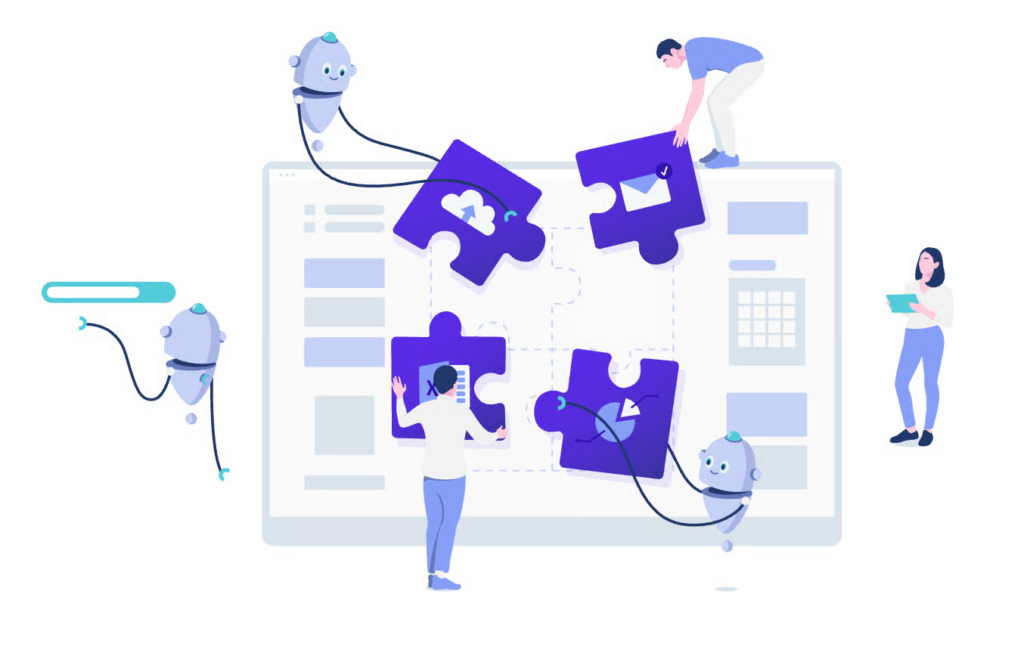
AI agents can’t route work without an accurate map of human capability. Yet 92.6% of firms with ‘complete’ skills inventories plan to scrap them. The data fails in three ways.
Don’t catalogue every skill. Start with the roles you plan to automate. Build one fast-updating governance pipe for them. You don’t need more data. You need true data.
AI adoption is concentrating. According to Indeed Hiring Lab, 90% of all AI-related hiring happens at just 1% of US firms. Among the largest firms, nearly half (49.9%) have posted at least one AI-related role. In the middle third of the size distribution, that figure is 2.0%. Across all firms, 94% haven’t posted a single AI-related job. This isn’t about access to tools. It’s about organizational infrastructure most mid-market firms don’t have – bandwidth, technical talent, data foundations. Small firms quadrupled adoption from 0.3% to 1.3% over six years. Progress that rounds to zero. Between 2024 and late 2025, adoption among the top 1% jumped 1.8 percentage points. For mid-market leaders, the question is whether they can build the basics fast enough before the productivity gap becomes permanent.
We’ve been looking at Make, a no-code automation platform gaining traction with mid-market ops, marketing, and recruitment teams. It appeals to groups that have outgrown basic trigger workflows but don’t have the capacity for custom development.
Make is built for complexity. It supports multi-branch logic like pulling data from unstructured files, routing it through analysis, and updating several systems at once, all via a visual builder and 3,000+ integrations.
Two features stand out. Maia lets non-technical users describe automations in plain English, cutting build time. Make Grid helps teams manage hundreds of connected scenarios as automation spreads across departments.
For the research behind this, see aibl’s UK mid-market AI adoption data.
Pricing scales by operations, starting free and rising with usage. The trade-off is a steeper learning curve. It suits teams running serious automation, not quick fixes.
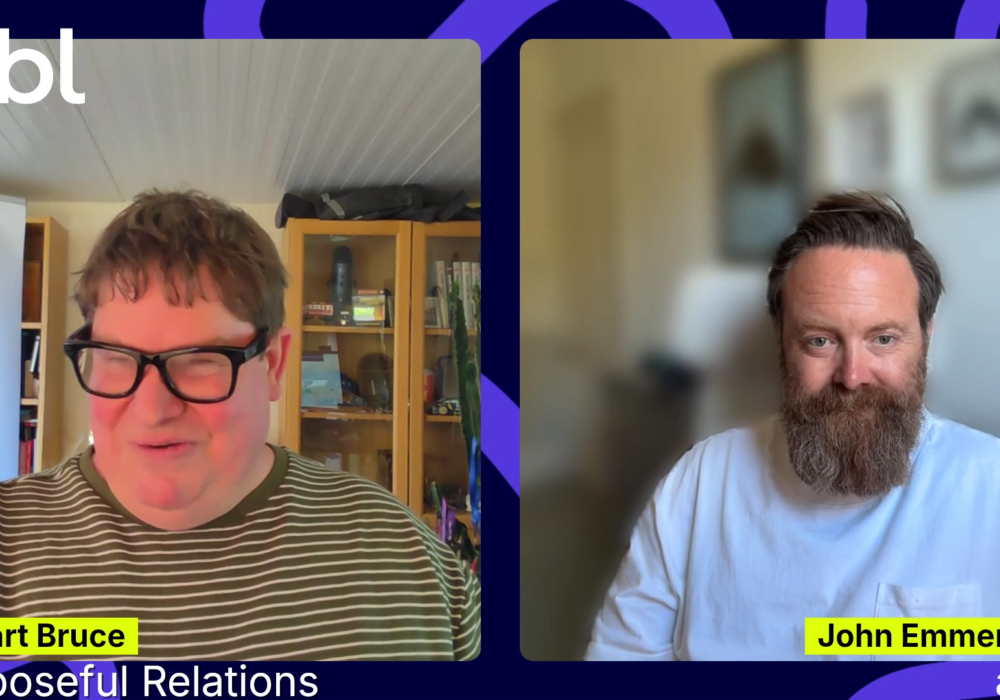
Stuart Bruce, co-CEO of Purposeful Relations, argues AI is not just a tool. It is a stakeholder describing you to everyone else...
Watch video
Stuart Bruce is co-founder and co-CEO of Purposeful Relations, which advises communications teams on AI,...
Read more
Everyone now knows that most AI projects fail. Most of any type of project fails after all. The 80% figure from...
Read moreGet ahead with the most actionable insights, playbooks and real-world AI use cases you can adopt right now, in your inbox every week