A technical lead working with a specialised UK eye clinic explains how they moved from a sticky-note reception desk to a voice and text system that handles bookings and routine queries end to end.
The issue wasn’t calls, it was volume. Reception spent most of the day handling the same booking and rescheduling requests. Much of it followed a script. A lot of it came in languages other than English.
When the clinic was small, the team could absorb it. As the patient base grew, reception became the bottleneck. The no-show rate started climbing because reminders were inconsistent and sometimes missed entirely.
So they built an automated receptionist using n8n, Retell, and Cal.com. Patients can now book, move, or cancel appointments by phone, SMS, email, or website chatbot. Conversations run in English and Urdu, with support for other common UK languages. Reminders go≠ out automatically by SMS and email. Certain follow-ups trigger outbound calls for post check-ups.
What they built
In plain terms, a filter and a router. They didn’t try to replace reception – they noticed most calls sat in the repetitive layer with predictable answers: ‘What are your opening hours?’ ‘Can I reschedule?’ ‘Do you do cataract surgery?’
They automated that layer and pushed anything messy to humans – complaints, edge cases, anything needing judgement stayed with staff.
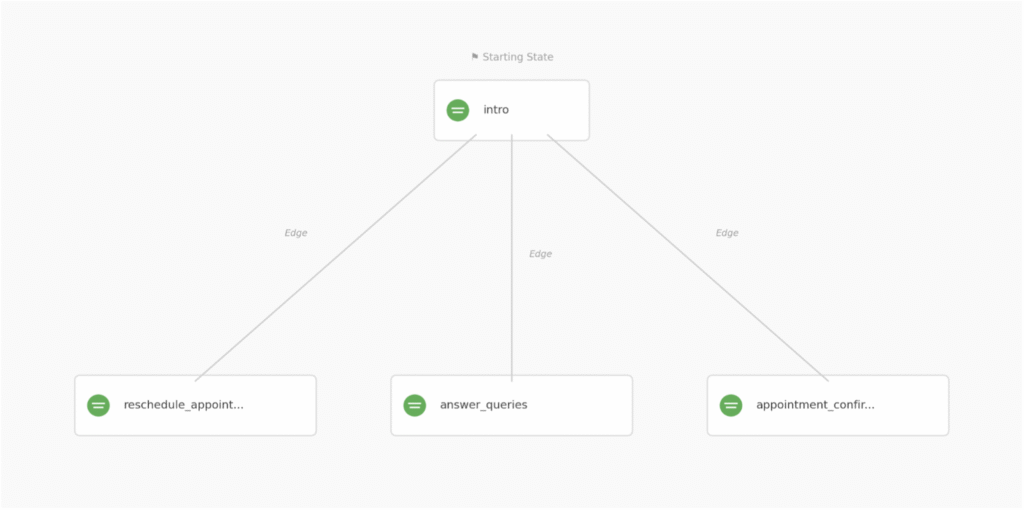
The clinic couldn’t share the full workflow JSON because it’s tied to live patient systems, but the routing is straightforward. After a short intro, the system sorts the call into one of three routes: reschedule an existing appointment, ask a question about services or procedures, or make a new booking.
They kept it deliberately narrow. In early tests, the voice experience started falling apart once the decision tree got crowded. Anything outside those paths goes to a person.
Patients can start through voice (Retell), SMS, email, or the website chatbot. Voice calls are handled in the patient’s language. For bookings, the system checks Cal.com in real time, offers available slots, and confirms instantly. Rescheduling works the same way: the patient gives a preferred date, and if it isn’t available, the system offers alternatives.
It keeps context. Returning patients are recognised, payment status can be checked, past appointments can be referenced. New patients are guided through registration before booking.
Reminders run automatically via SMS and email. Patients get a message two days before an appointment, then another the day before. High-priority follow-ups can trigger outbound calls. Staff get Slack alerts when something needs intervention. Interactions are logged to Google Sheets for oversight and audit.
They rolled it out in stages – English first, across voice and text. Once that was stable, they added Urdu and tested it with a subset of patients. Retell handled language switching without separate workflows for each language. Cal.com connected to the clinic’s existing booking system so appointments synced immediately.
The knowledge base covered the obvious FAQs on hours, services, insurance, and procedures. For the first month, staff reviewed responses weekly to catch errors or out-of-date information, then moved to monthly checks.
The impact
Reception workload dropped by over 70%. No-shows fell by 35%, mainly because reminders were consistent and patients could reschedule without getting through on the phone. Work that previously kept three reception staff busy now runs with one person overseeing the system.
One side effect was compliance – before, patient interactions were scattered across sticky notes, voicemail, and staff memory. Now they’re logged centrally, with timestamps, consent records, and conversation history. Audit trails are much easier to produce.
What to watch
Multilingual quality matters. Retell can switch languages, but the clinic still had to validate terminology, tone, and cultural norms through native speaker testing. Direct translation fell over once formality and phrasing started to matter.
Latency was also key. Early tests had response delays that made calls feel awkward. They upgraded models and tuned the n8n workflow to reduce lag. Beyond two seconds, it simply felt broken.
Want to see the wiring behind workflows like this? Join us at aiblLIVE this October. In the Deep Dives, you’ll work through real builds with the teams deploying them for UK mid-market firms: logic maps, prompt structures, and the integration decisions that make or break the experience.