
Why 96% AI adoption at Make didn’t start with tools or training
Watch the interview here When Sara Maldon joined Make two years ago, there was no approved AI tool. Nobody...
Read morePLUS: Why Your Agents Keep Losing Context (And How to Fix It)
UK employers keep saying they need AI skills, but scratch the surface and things get vague.
That’s what Dr Nisreen Ameen found last year while running workshops with employers and sector bodies for Skills England. The problem is more fundamental than money or access to tools. Most organisations couldn’t describe the capability they were trying to build.
Without that definition, the rest is built on shaky ground. Job specs are guesswork and training can’t be assessed because competence was never agreed. If someone genuinely capable shows up, they’re not always recognised for it, and may look for another business that ‘gets it’.
The mid-market is particularly exposed. In many firms, ‘AI’ becomes an accidental team split across IT, ops, finance and customer functions. No one owns a shared view of what good looks like.
Big firms have the slack to experiment and correct course. Startups move quickly and change direction without much ceremony.
Mid-sized businesses sit in between. They don’t have the resource to power through missteps, and risk isn’t a native skill. Some organisations freeze. Others lean hard on vendor promises because that feels safer than making internal calls on capability. Both paths run on educated guesswork.
That stood out to me this week as we planned Dr Ameen’s session for aiblLive.
She starts with the definition problem, not deployment. What work do you actually want done differently, and what would competence look like inside that workflow? It sounds obvious when you say it out loud, but it’s the critical step most organisations skip.
A mid-market marketing agency built a single agent to research target companies for outbound campaigns. On its own, it did the job. It pulled company data, flagged recent news, identified decision-makers, and wrapped it all into a tight one-page brief.
Problems started when they chained it to a copywriter agent. The brief still made sense to a human reader, but the freshly recruited agent saw something else entirely. Just a list of points, all sitting at the same level.
In one case, the researcher agent noted that a company had hired a VP from Amazon and that its stock was down 15%. The copywriter agent treated them as equally important and used both. The email missed the mark.
| Input to copywriter Prospect: Sarah Chen, VP Operations, Example Corp News: Hired from Amazon Supply Chain (Oct 15) News: Stock down 15% YTD Resulting email “Hi Sarah, I saw you recently joined Example Corp as VP of Operations. Congratulations on the new role. I also noticed the company stock is down 15% year to date. I’d love to touch base about how we can help you save money during this difficult time…” |
The stock price shows up simply because it’s in the brief. Cost savings becomes the default angle because nobody framed a better one. Meanwhile the real signal, Sarah’s Amazon background, gets acknowledged politely but not used strategically.
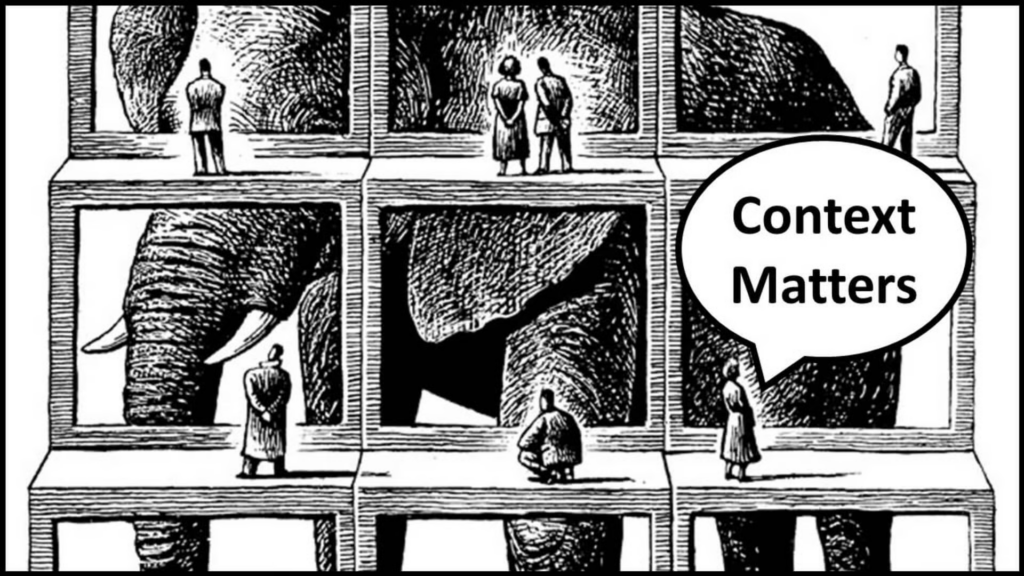
Most teams treat agent chains like relay races. Pass the baton, job’s done. But knowledge work doesn’t work that way. Three things disappear at the handoff: the reasoning behind decisions, the confidence level of each claim, and the constraints that prevent obvious mistakes.
Don’t hand off raw text and hope the next step reads it the way you do. Hand off a structured Context Envelope instead. A simple packet that separates facts from intent, and spells out what matters.
NEWS
We’re still collecting stories from the field, what worked, what didn’t, and what surprised you. If you’ve got a case study that belongs on the aiblLIVE stage, get in touch via John@aiblmedia.com.

Mid-market firms closed out 2025 with steady growth. NatWest’s Business Growth Tracker edged up to 55.3 in December from 54.3 in November, driven mainly by services. Confidence remains high heading into 2026. Firms talk about hiring and stronger pipelines. Yet employment fell again in December, extending a fifteen-month run of job cuts among SMEs. Output and sentiment are rising. Headcount keeps moving the other way.
That mismatch points to caution. Firms are protecting margins and locking in efficiencies rather than adding capacity. Cost pressures were the highest since April, with wages, fuel, and other inputs climbing. The response was higher prices and tighter staffing, not spending ahead of growth.
So what’s driving the confidence? Maybe automation and productivity gains are letting firms lift output without adding people. Or the optimism is real, but spending stays restrained because leaders still aren’t convinced delivery will follow.
Virtuous AI and Chief Executive Group surveyed 300+ mid-market CEOs in the Autumn of 2025. Belief is almost universal (98%). Action isn’t. Only 7% have a company-wide strategy. Over half are still in pilots. Another third explored and then stalled. That’s less a strategy gap than a deployment one.
Eighty-six percent say they lack expertise. 81% struggle with integration. 65% point to data. Still, the clearer signal is intent. Seventy-eight percent chase efficiency, while just 19% target new revenue. If the goal is efficiency first, AI becomes a way to make today’s operations 10% faster, not a lever to build something new.
And pilots stay isolated: a chatbot here, forecasting there, an experiment in marketing. Each sits in its own lane, so the company gets tools, not transformation.
UK mid-market businesses say they’re turning to AI and productivity improvements to drive growth. BDO’s survey of 500 mid-sized business leaders puts that at 42%. Yet 88% plan to increase headcount in 2026, while only 21% expect growth above 10%. Just 36% say technology and AI investment is actually driving those hiring plans. The gap between what firms say and what they back is sitting in plain sight.
Hiring is where confidence shows up. If AI and productivity are truly the growth lever, you’d expect technology investment to be the main reason for adding people. Instead, it’s about a third. The rest are hiring off other signals, like newly secured funding (31%), general expansion, or a cautious hedge with modest increases.
When businesses talk transformation but hire like they’re not sure it’ll pay off, that’s deployment uncertainty made visible.
Mid-market IT leaders talk up AI. The budget says otherwise. In MES Computing’s survey of 100+ senior IT leaders at organisations with 100 to 499 employees, more than 75% spent under 5% of their IT budget on Gen AI in 2025.
More than 80% spent under 5% on agentic AI. Spending flowed to other priorities: 48% put money into cybersecurity and incident management, 35% into business process automation, and 57% into VARs and solution providers.
When ROI disappointed, the causes were practical: adoption issues came first, people simply didn’t use it. Then came poor planning, limited IT involvement, and ‘vendor hyperbole versus implementation reality’.
The mid-market’s real constraint isn’t enthusiasm but the fundamentals that make this stuff work. If you starve the thing you say matters, ROI won’t show up.

This week we’ve been tracking Forethought, a multi-agent platform that G2 has recognised as a mid-market leader for customer support. If you’re running a lean support team where repetitive tickets never quite justify another headcount, Forethought positions itself as extra capacity rather than a chatbot.
What stands out is the multi-agent setup. Instead of one AI trying to do everything, different agents handle different parts of the workflow: identify, triage, resolve and assist. The platform works across chat, email, voice and SMS from day one, learning from your past tickets and help centre content.
The catch is the entry bar. Implementation needs at least 20,000 historical tickets for training, or 2,000 tickets a month to keep performance steady. That clearly targets established support operations, not early-stage startups. Pricing isn’t public, so you’re into custom quotes based on volume and complexity.

Watch the interview here When Sara Maldon joined Make two years ago, there was no approved AI tool. Nobody...
Read more
Voice notes from calls, meeting transcripts, half-formed ideas recorded on the move. They contain commercial...
Read more
For this week's AI in practice, we spoke to the founder of a regional managed IT services provider that had grown...
Read moreGet ahead with the most actionable insights, playbooks and real-world AI use cases you can adopt right now, in your inbox every week